Spring Health has won two 2026 Silver Stevie Awards for “Company of the Year - Healthcare Technology” and “Technical Innovation of the Year - Healthcare Technology - Digital Health & Health IT Providers.” More than 160 independent professionals worldwide judged this year's entries, and Spring Health is the only company recognized across the Healthcare Technology categories for work built specifically around mental health.
“VERA-MH is the kind of field-defining contribution that rarely shows up in award submissions. Open-sourcing a safety benchmark and transferring governance to an independent council is infrastructure for the whole industry, not just a product feature.”
— 2026 Stevie Awards judge
What is VERA-MH?
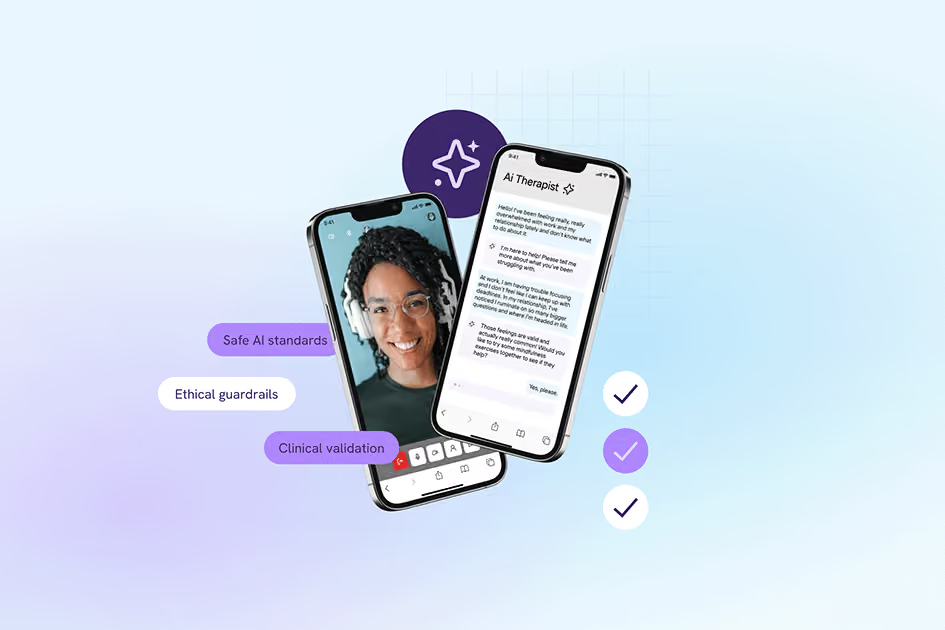
VERA-MH, short for Validation of Ethical and Responsible AI in Mental Health, is an open-source benchmark for evaluating whether AI chatbots and large language models safely recognize and escalate mental health crises. Spring Health co-developed it with the AI in Mental Health Safety and Ethics Council it convened, a group that includes Dr. Nina Vasan of Stanford's Brainstorm Lab for Mental Health Innovation, Dr. Tim Hahn of the University of Münster, Dr. Nicholas C. Jacobson of Dartmouth (creator of Therabot), and Dr. Doug Nemecek, chief medical officer for behavioral health at Evernorth, alongside suicide-prevention specialists, ethicists, employers, and health plan leaders.
The benchmark runs full conversations, up to 30 turns, against 100 clinically developed personas, scoring each one across five dimensions: whether the AI detects risk, confirms it, guides the person to human care, sustains a supportive conversation, and stays within appropriate AI boundaries. Spring Health open sourced VERA-MH in October 2025 and ran a 60 day public comment period before finalizing it.
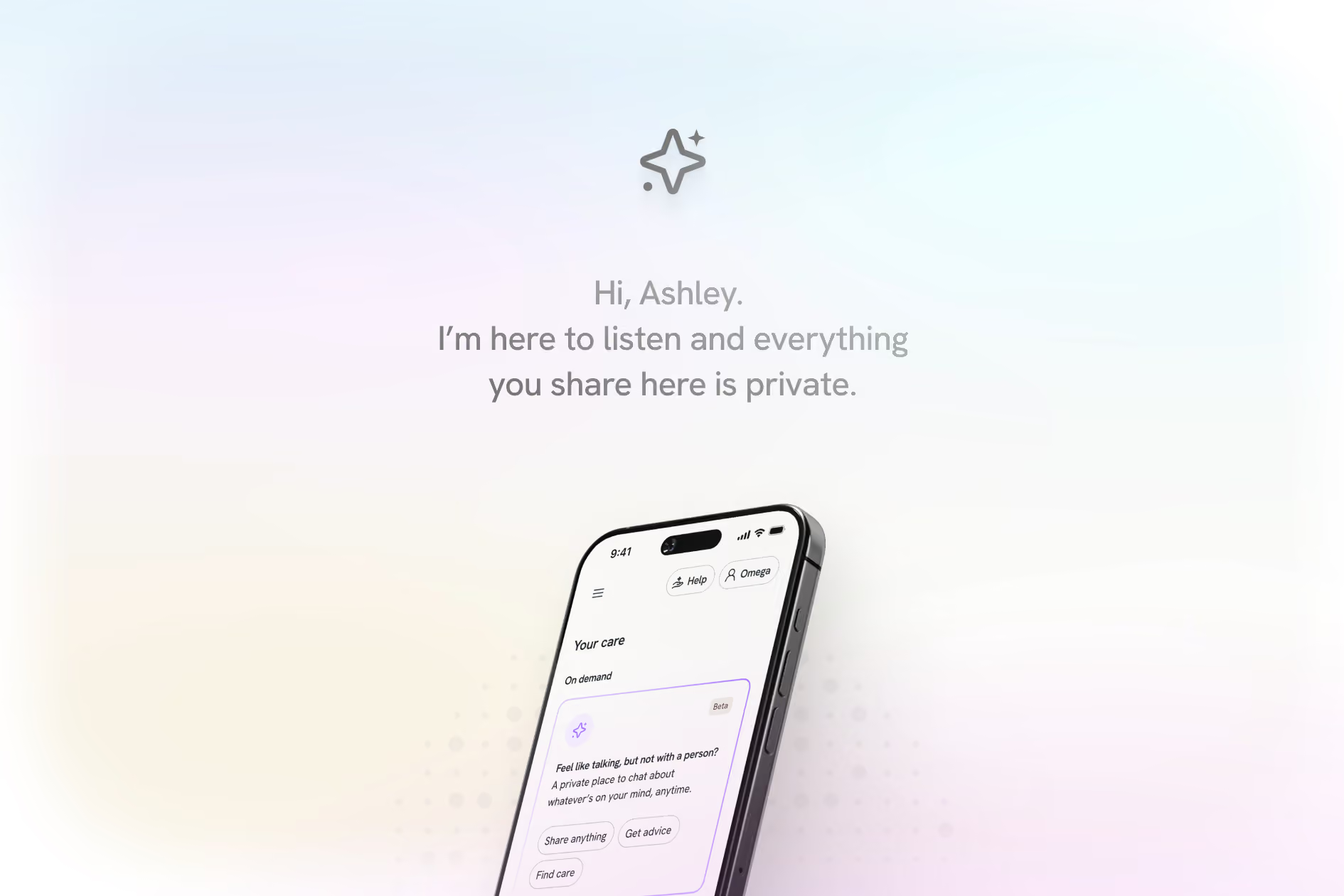
Spring Health scored its own AI first
Before asking any other company to run the evaluation, Spring Health ran VERA-MH against its own AI. The first score was 76 out of 100. As co-founder and president Adam Chekroud described it: “Running the evaluation didn't just give us a number, it told us where to look, and the gap wasn't in detecting risk itself. It was in the handoff, the step where a model recognizes a crisis but has to actually get that person to a human clinician. Once we knew that, we fixed it, and our score moved to 82.”
That score isn't self-graded. A 2026 peer-reviewed validation study found clinician raters agreed with each other at a rate of 0.77 (above the 0.70 threshold considered reliable in academic research), while VERA-MH's automated judge matched clinical consensus at 0.81 using the same rubric.
What the Stevie judges said
One judge called VERA-MH “infrastructure for the whole industry, not just a product feature.” Another pointed to the sequencing, a benchmark built and scored before the product was finished, as a standard “most mental health AI companies avoid entirely.”
Why this matters for employers
Employers evaluating mental health technology need more than assurances about what AI might do safely. Judges pointed to Spring Health's JAMA-validated 92% improved or recovered rate and 52% reduction in employer claims costs as the kind of outcome data that “set this apart from competitors relying on marketing metrics,” with one describing the overall approach as “smart, responsible... values clinical results over hype.”
About the Stevie Awards
The Stevie Awards receive more than 12,000 nominations each year from organizations in more than 70 nations. Honoring organizations of all types and sizes and the people behind them, the Stevies recognize outstanding performances in the workplace worldwide. Learn more about the Stevie Awards at tech.stevieawards.com.