


2025 was a watershed year for mental health at work. HR and benefits leaders faced employee stress, persistent burnout, the rapid disruption of AI in healthcare, and intense pressure to manage costs without sacrificing care quality. It was a year where "checking the box" on benefits was no longer enough; the mandate shifted toward precision, data-driven outcomes, and inclusivity.
This post is a curated guide to the conversations that defined the year. We’ve rounded up 10 of our most-read Spring Health blog posts of 2025 to help you catch up on the critical themes shaping the future of workforce wellbeing.
Whether you are finalizing your strategy for 2026 or just taking a breath after open enrollment, this recap offers a quick, value-packed way to see what mattered most to the HR community this year.
1. Neurodivergent employees boost productivity and innovation
What you’ll learn:
You will discover why designing for neurodiversity is a talent and innovation strategy. The piece breaks down practical ways to adjust management styles and workplace environments to help neurodivergent talent thrive. It challenges leaders to move beyond "accommodation" toward true inclusion, highlighting how different ways of thinking can lead to breakthrough problem-solving.
Why it mattered in 2025:
- Talent competition: Companies realized that rigid workplace norms were driving away high-performing talent.
- Neurodiverse evolution: Leaders sought actionable ways to expand support within their day-to-day employee experience.
- Manager support: HR teams needed concrete guidance to help managers support diverse working styles.
2. The continuous care model in mental healthcare
What you’ll learn:
This post explains "continuous care" in simple terms: it is ongoing, data-informed support that adapts as an employee’s needs change, rather than a one-and-done transactional interaction. You will learn why this model is essential for preventing relapse and keeping employees healthy over the long term, contrasting it with legacy EAPs that often drop the ball after a handful of sessions.
Why it mattered in 2025:
- Utilization gaps: HR leaders grew frustrated with benefits that employees used once and abandoned.
- Cost containment: Data showed that preventing relapse is far cheaper than treating acute crises repeatedly.
- Better outcomes: Employers demanded proof that their mental health spend was actually making people healthier.
Watch above: Spring Health CEO and Co-Founder April Koh illustrates how we've evolved as a society to more continuous, high-touch approaches in discussing the need for continuous care
3. 2026 mental health trends for your workplace
What you’ll learn:
If you are designing your 2026 strategy, start here. This post forecasts the continued rise of AI-enhanced care, the recognition of burnout as a systemic organizational risk, and the increasing demand for inclusive, culturally responsive care. It connects these trends back to the practical steps employers must take today to stay competitive.
Why it mattered in 2025:
- Future-proofing: Leaders wanted to ensure their multi-year contracts wouldn't be obsolete in six months.
- Proactive strategy: Moving from reactive crisis management to proactive population health management.
- Holistic wellbeing: The trend toward treating the "whole person" gained undeniable momentum.
4. Introducing VERA-MH: The new standard for ethical AI in mental healthcare
What you’ll learn:
This piece outlines how Spring Health approaches AI differently—prioritizing clinical safety, ethics, and privacy above all else. You will see how VERA-MH supports providers by handling administrative burdens, allowing them to focus entirely on the patient. It distinguishes between "hype-y" AI tools and responsible, clinically integrated technology that protects member data.
Why it mattered in 2025:
- AI anxiety: HR and legal teams needed reassurance that AI tools wouldn't introduce liability or privacy risks.
- Provider burnout: The industry faced a shortage of therapists; AI emerged as a critical tool to reduce their administrative load.
- Quality control: Leaders looked for technology that enhanced human care rather than attempting to replace it.
5. AI in mental healthcare: A big-picture explainer
What you’ll learn:
This is the foundational primer for any benefits leader confused by the sudden influx of "AI-powered" solutions. It breaks down the specific applications of AI and explains what to look for when vetting vendors. It emphasizes that AI should be a "co-pilot" for clinicians, not a replacement for human empathy.
Why it mattered in 2025:
- Vendor noise: The market was flooded with AI claims; leaders needed a framework to evaluate them.
- Innovation mandates: C-suites pushed HR to adopt modern tech, requiring leaders to get smart on AI fast.
- Scalability: Employers needed solutions that could scale quality care to thousands of global employees efficiently.
6. Mental health at work: The 2025 global report
What you’ll learn:
This report was a wake-up call. It details the rising tide of stress and financial anxiety affecting employees worldwide. You will find critical data on the decline of traditional EAPs, the affordability barriers employees face even with insurance, and the shift toward measurement-based care. It is a must-read for benchmarking your strategy against global standards.
Why it mattered in 2025:
- Strategic planning: This data served as the backbone for many 2026 benefits strategies.
- Global consistency: Multinationals struggled to provide consistent support across borders; this report highlighted the gaps.
- The ROI conversation: The report provided the metrics HR needed to defend mental health budgets to the CFO.
7. New study confirms Compass leads to better clinical outcomes
What you’ll learn:
This article moves beyond anecdotes to hard evidence. It summarizes a study showing that members using Compass achieved significantly better clinical outcomes compared to standard care. For HR leaders, this connects the dots between a tech-enabled platform and the ultimate goal: employees actually getting better, faster.
Why it mattered in 2025:
- Demand for proof: "Trust us" was no longer an acceptable answer from vendors; buyers demanded peer-reviewed validation.
- Value-based care: The industry continued its shift toward paying for outcomes, not just access.
- Confidence: HR leaders needed to know their investment was positively impacting lives.
8. The 5 pillars of integrating AI in mental health
What you’ll learn:
Moving from theory to practice, this post outlines five non-negotiable pillars for AI adoption. It provides a checklist for benefits leaders to ensure their partners are using AI to close care gaps, not widen them.
Why it mattered in 2025:
- Risk mitigation: Leaders needed a rubric to ensure safety and compliance.
- Equity concerns: There was valid concern that biased algorithms could harm marginalized groups; this post addressed those fears directly.
- Implementation: HR teams needed a roadmap for rolling out AI-enhanced benefits without alienating employees.
9. Employee burnout is an organizational risk, not an individual failure
What you’ll learn:
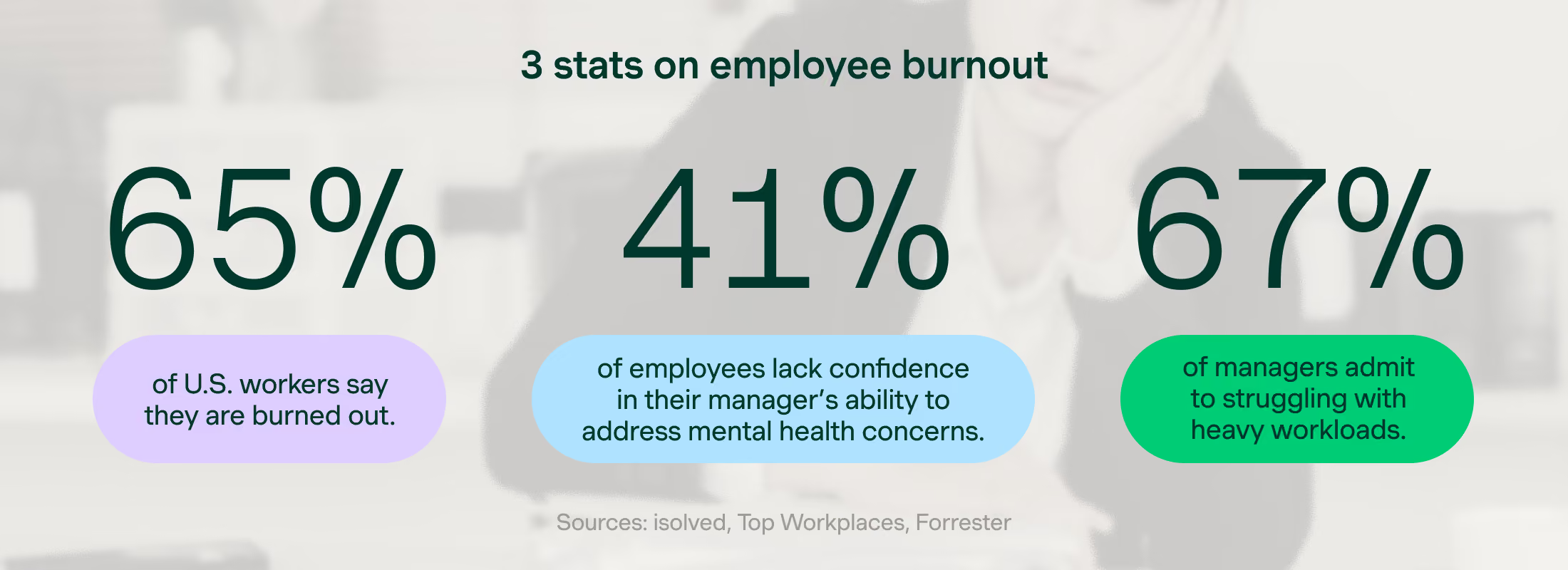
This article argues that yoga apps and resilience training cannot fix a broken workload. It positions burnout as a critical business risk that threatens retention and performance. You will learn why addressing burnout requires systemic changes rather than just self-care tips.
Why it mattered in 2025:
- Retention crisis: Burnout remained the top driver of voluntary turnover.
- Cultural shifts: Employees pushed back against "grind culture," demanding sustainable working conditions.
- Manager overwhelm: The post highlighted the "squeeze" on middle managers and the support they urgently need.
10. Expanding personalized mental health journeys
What you’ll learn:
Personalization is the key to removing friction from mental healthcare. This article explains how data and assessments create unique journeys for each employee—whether they need self-guided digital exercises, coaching, or high-acuity clinical treatment. It highlights how reducing the "guesswork" for employees speeds up their time to remission and improves engagement.
Why it mattered in 2025:
- Access issues: Employees were tired of navigating complex directories to find the right care.
- Diverse needs: One-size-fits-all benefits failed to serve a multigenerational, diverse workforce.
- Engagement: HR leaders saw that when care feels relevant and personal, utilization goes up.




.png)



.avif)
.avif)


.avif)

.avif)
.avif)
