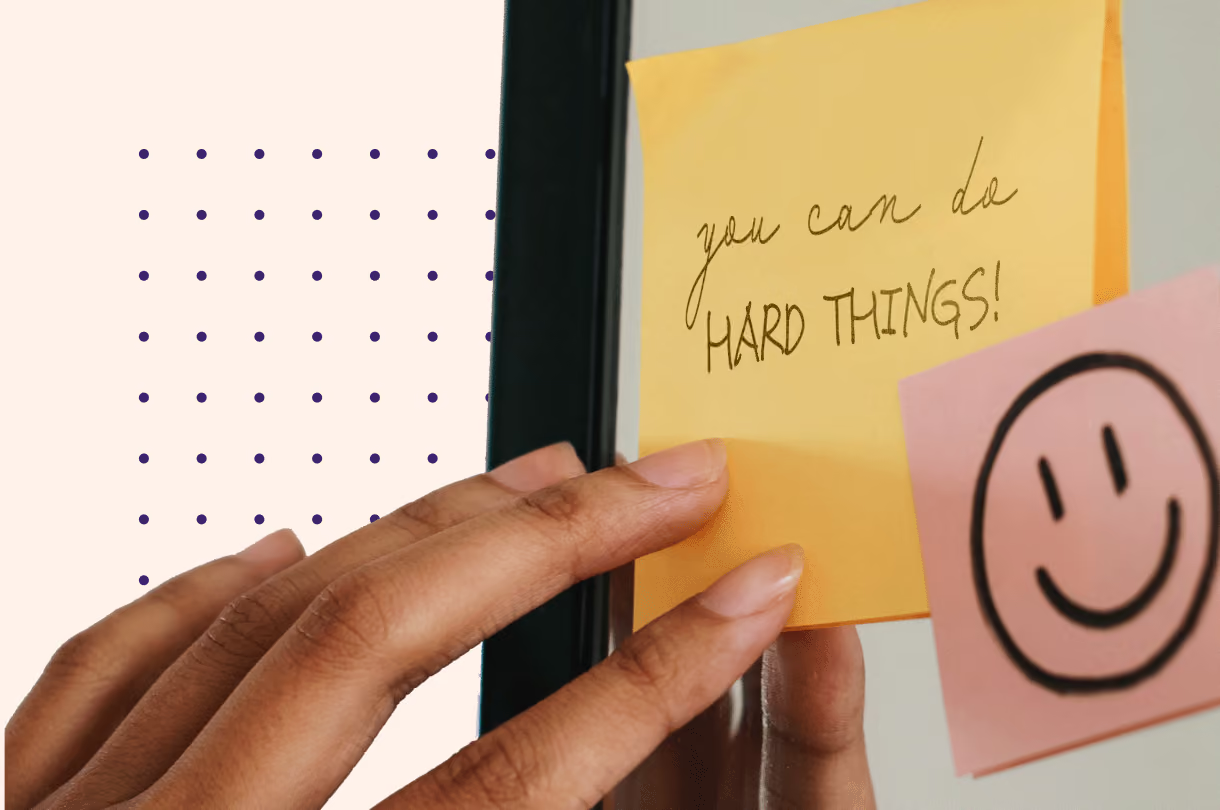



Negative thoughts have a way of sneaking in at the worst possible moments. You replay a conversation on loop, assume the worst about an upcoming meeting, or lie awake at night worrying about everything that could go wrong. If you’ve been wondering how to stop negative thinking, you’re in the right place.
Negative thinking refers to habitual patterns of pessimistic, self-critical, or threat-focused thoughts that can influence mood and behavior. It can feel automatic and exhausting, especially when advice like “just think positive” doesn’t help. That’s because negative thoughts aren’t a personal failure; they’re often the result of how the brain is wired to protect us from threat.
This guide breaks down why negative thinking is so persistent, and the evidence-based strategies that actually help interrupt it.
Some strategies help interrupt negative thoughts in the moment, while others work best when practiced consistently over time. Most people see the greatest change by using a combination of both.
What Is Negative Thinking and Why Is It So Hard to Stop?
Everyone has negative thoughts from time to time. An occasional worry or self-critical thought is a normal part of being human. Negative thinking becomes a problem when it turns into a persistent pattern, one that shows up automatically, feels hard to control, and starts to affect your mood, sleep, relationships, or ability to focus.
Common types of negative thinking include:
- Catastrophizing: assuming the worst-case scenario will happen
- Rumination: replaying past mistakes or worries on repeat
- All-or-nothing thinking: “If I mess this up, everything is ruined”
- Mind reading: assuming you know what others are thinking, and that it’s negative
- Overgeneralizing: turning one bad experience into a sweeping conclusion
What Causes Negative Thinking?
Negative thinking is often driven by the brain’s built-in threat detection system, past experiences, and ongoing stress. Over time, these factors can reinforce automatic patterns like rumination and catastrophizing, making negative thoughts feel habitual rather than intentional. Basically, negative thinking is a learned mental habit. It’s an unhelpful misalignment of very normal brain function that you can actually learn to redirect.
Keep in mind that your goal shouldn’t be to banish all negative thoughts forever. That would be unrealistic and veer into toxic positivity territory (more on that later). But if your negative thoughts are persistent and starting to interfere with your daily life, coping strategies and professional mental health support can help.
Therapy is one of the most effective ways to understand negative thought patterns and practice skills that interrupt them. If you’re unsure whether therapy is right for you, this guide on therapy FAQs, from “Do I need it?” to “Will it help?” can help clarify what to expect.
10 Ways to Stop Negative Thinking
Many of the strategies below are commonly used in evidence-based therapies such as cognitive behavioral therapy (CBT) and mindfulness-based approaches. CBT-based techniques like cognitive reframing and thought records are among the most widely studied methods for reducing persistent negative thinking patterns.
1. Cognitive Reframing
What it is: Learning to notice an unhelpful or extreme thought and intentionally shift it toward a more balanced, realistic interpretation.
Why it helps: Cognitive reframing is a foundational skill in CBT. It essentially trains you to question your brain’s automatic assumptions and offer an alternate perspective.
How to do it: When a negative thought shows up, pause and ask: Is there another plausible explanation? What evidence supports this thought, and what evidence might challenge it?
2. Thought Labeling
What it is: Identifying and naming the type of negative thinking pattern you’re experiencing, such as catastrophizing, rumination, or all-or-nothing thinking.
Why it helps: Labeling a thought creates psychological distance, helping you observe it rather than immediately reacting to it. This distance can reduce the emotional intensity of the thought and make it feel less overwhelming.
How to do it: Instead of arguing with the thought, try saying: “This is a worry thought” or “This is rumination showing up.”
3. Schedule a “Worry Time”
What it is: Designating a specific, limited window each day to intentionally focus on worries.
Why it helps: When you’re stuck in a loop of negative thoughts, it can be tempting to let yourself spiral. Giving yourself a time-bound space to return to your worries often makes it easier to put a pin in them so you can get back to what you were doing.
How to do it: When you’re stuck in a negative thought spiral, set aside 10 minutes later in your day to work through these worries. When that time is up, find another healthy coping mechanism to turn to (like taking a walk or calling a friend).
4. Keep a Thought Record
What it is: Writing down negative thoughts, the situation that triggered them, and possible alternative perspectives.
Why it helps: Thought records make patterns more visible over time and help reduce cognitive distortions by slowing down automatic thinking.
How to do it: Use a simple notebook or your Notes app to jot down the thought, what was happening at the time, and a more balanced response.
5. Practice Mindfulness
What it is: Paying attention to the present moment (thoughts, sensations, or emotions) without judging or trying to change them.
Why it helps: Mindfulness-based practices have been shown to reduce rumination and stress by shifting attention away from repetitive thought loops and back to the present. This approach is often used alongside therapy to address underlying anxiety symptoms.
How to do it: When thoughts start spiraling, gently focus on your breath or physical sensations for one to two minutes.
6. Use Grounding Techniques
What it is: Using your senses to anchor yourself in the present moment when your thoughts feel overwhelming.
Why it helps: Grounding techniques calm the nervous system and interrupt anxious thought cycles by redirecting attention away from mental loops and toward the body.
How to do it: Try the 5-4-3-2-1 exercise: name five things you can see, four you can feel, three you can hear, two you can smell, and one you can taste.
7. Socratic Questioning
What it is: Examining the accuracy, usefulness, and assumptions behind a negative thought.
Why it helps: This CBT-based approach reduces how believable and convincing negative thoughts feel, making them easier to challenge over time.
How to do it: Ask yourself questions like: What would I say to a friend in this situation? or Is this thought helping me right now?
8. Journal
What it is: Writing freely about worries or recurring thoughts to get them out of your head and onto paper.
Why it helps: Expressive writing has been linked to improved emotional regulation and can reduce mental clutter by externalizing your thoughts.
How to do it: Set a timer for five to ten minutes and write continuously without editing or censoring yourself.
9. Practice Self-Compassion
What it is: Responding to yourself with understanding and kindness instead of criticism when negative thoughts arise.
Why it helps: Research links self-compassion to lower levels of anxiety and depression, in part because it reduces harsh self-judgment that fuels negative thinking.
How to do it: Try replacing critical self-talk with phrases like: “This is hard, and I’m doing the best I can right now.”
10. Gratitude (Without Forcing Positivity)
What it is: Intentionally noticing what’s going well, even in small or ordinary moments.
Why it helps: Gratitude practices can improve mood and perspective, but they’re most effective when used alongside acknowledging your stressors.
How to do it: Hold both truths at once: “This is stressful, and I handled part of it better than I expected.”
The Goal Isn’t Constant Positivity
A common reason negative thinking persists is that people are taught to replace it with forced positivity instead of learning how to respond to it more flexibly.
Trying to “think positive” all the time can actually make negative thinking worse. This is often referred to as toxic positivity, the idea that uncomfortable emotions should be avoided, minimized, or replaced as quickly as possible.
When people feel pressure to stay positive, they may start judging themselves for having negative thoughts at all. That self-criticism can increase shame, suppress emotional processing, and make negative thought patterns more persistent over time.
Learning how to stop negative thinking isn’t about forcing optimism or pretending everything is fine. It’s about developing psychological flexibility, the ability to notice thoughts and emotions as they arise, respond to them with intention, and still move forward in a way that aligns with your values.
Balanced thinking allows room for discomfort without letting it dominate. You can acknowledge that something is hard or painful while also building skills to keep negative thoughts from running the show.
Ready to Get Help That Actually Works?
Persistent negative thinking can feel automatic and deeply ingrained, especially when you’ve been dealing with it for a long time. While self-guided strategies can be helpful, many people find that working with a therapist makes it easier to recognize patterns, strengthen coping skills, and break long-standing mental habits with support and structure.
Spring Health connects people to evidence-based mental health care, including therapy, coaching, and on-demand tools designed to address anxiety, depression, and stress at their roots.
If you’re ready to explore support that goes beyond surface-level advice, you can learn more about your care options with Spring Health.
Frequently Asked Questions About Negative Thinking
Is negative thinking a sign of anxiety or depression?
Negative thinking is commonly associated with anxiety and depression, but it can also occur during periods of high stress or life transitions. Persistent patterns that interfere with daily functioning may benefit from professional support like therapy.
How do you stop negative thoughts in the moment?
Grounding techniques, mindfulness, and thought labeling can help interrupt negative thoughts temporarily. Long-term change usually comes from practicing these skills consistently over time.
Can therapy help stop negative thinking?
Yes, many evidence-based therapies, including CBT, focus specifically on identifying and changing unhelpful thought patterns that contribute to anxiety and depression.
Why do negative thoughts feel so convincing?
The brain is wired to prioritize potential threats, which can make negative thoughts feel urgent or true, even when they aren’t accurate reflections of reality.
Is it bad to have negative thoughts?
No, negative thoughts are a normal part of being human. The goal isn’t to eliminate them, but to reduce how much control they have over your emotions and behavior.