
.avif)
.avif)
Blog highlights
- Managers have a direct influence on employees’ mental health, engagement, and willingness to seek support.
- Mental health training helps managers recognize signs of distress, have supportive conversations, and guide employees to care.
- Younger employees are especially affected by stress.
- Manager training works best when it is connected to a broader mental health platform that gives leaders practical tools.
Managers are at the center of the employee experience. They shape workloads, set team norms, influence psychological safety, and often become the first person to notice when an employee is struggling.
That makes mental health training for managers a practical way to help leaders recognize distress earlier, respond with empathy, and guide employees toward the right support before challenges escalate.
But training alone is not enough. Managers also need a clear path to care behind them:
- Practical guidance
- Accessible resources
- A mental health benefit that can help employees move from concern to support quickly
The manager’s role in employee mental health
Managers are not therapists, and they should never be expected to diagnose or treat mental health concerns. But they are often close enough to see when something changes.
An employee may become withdrawn, miss deadlines, seem unusually irritable, show a noticeable drop in work quality, or begin missing more meetings or workdays. Those signs do not always mean someone is experiencing a mental health challenge, but they can signal that a supportive conversation is needed.
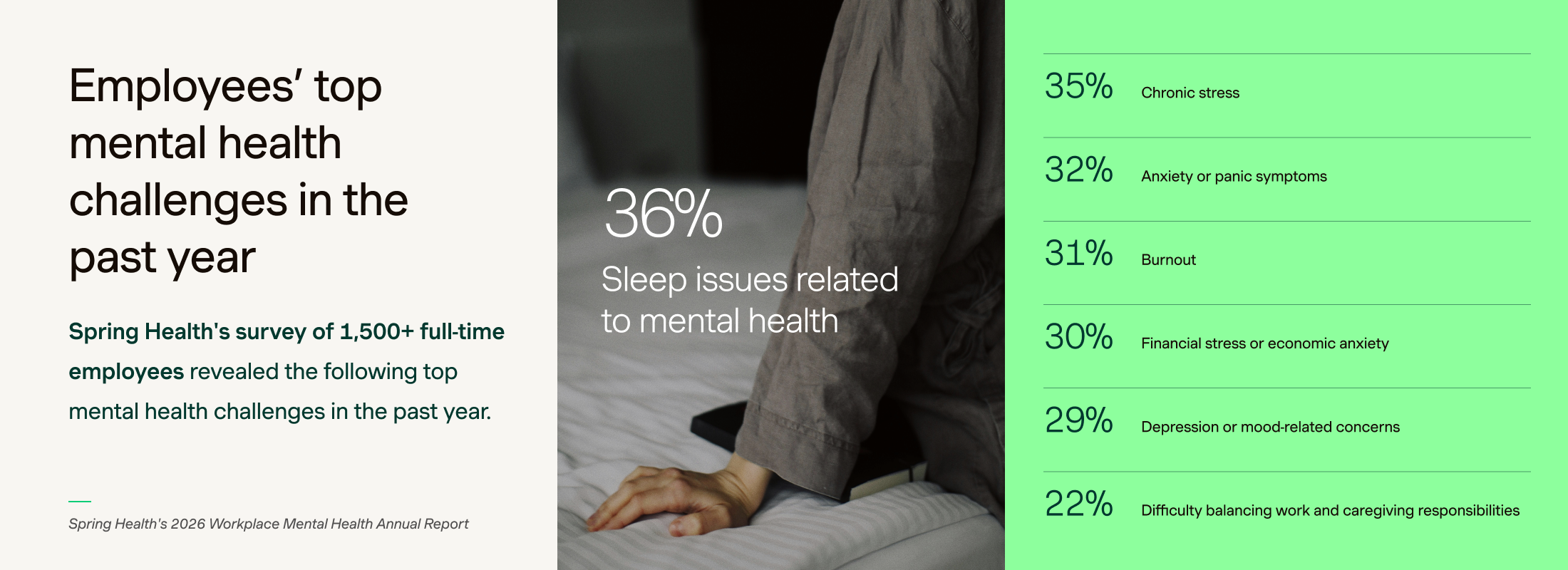
That need is becoming harder to ignore. The APA has reported that 90% of Gen Z experienced psychological or physical symptoms due to stress in the past year.
At the same time, Spring Health’s 2026 Workplace Mental Health Annual Report found that HR leaders estimate 30% of employees are experiencing silent burnout, and 40% of employees who have experienced burnout said they felt physically present but mentally checked out.
You don’t want managers to wait for a crisis to respond. They need training that helps them notice changes, respond appropriately, and connect employees to support without overstepping.
What mental health training should help managers do
Effective mental health training for managers should be practical, specific, and easy to apply in real work situations. Awareness is useful, but managers need more than a high-level understanding of mental health.
They need to know what to look for, what to say, what not to say, when to involve HR, and how to guide employees toward available resources.
Strong manager training should help leaders build three core skills.
1. Recognize signs of distress
Employees do not always disclose when they are struggling. Some may worry about stigma, privacy, career consequences, or being seen as less capable.
Training helps managers observe changes with care. That may include noticing shifts in attendance, work quality, communication, engagement, focus, or behavior.
A trained manager can move from assumption to observation. Instead of saying, “You seem burned out,” they might say, “I’ve noticed you’ve seemed quieter in meetings and missed a few deadlines recently. How are things going?”
That kind of conversation keeps the focus on care, not judgment.
2. Start supportive conversations
Many managers avoid mental health conversations because they are afraid of saying the wrong thing. Training gives them language and boundaries so they can respond with confidence and compassion.
A supportive conversation should be private, respectful, and focused on listening. Managers can:
- Ask open-ended questions.
- Acknowledge what they are hearing.
- Avoid trying to solve everything themselves.
- Remind employees of available support.
The most important distinction is this: A manager’s role is to be a bridge, not a clinician. They can normalize asking for help, connect employees to resources, and create space for next steps. They should not diagnose, counsel, or become the employee’s only source of support.
3. Guide employees to the right resources
A mental health conversation only helps if it leads somewhere useful. Managers need to know which resources exist, how employees can access them, and what to do when a situation feels urgent or complex.
That might include therapy, coaching, medication management, crisis support, leave resources, accommodations, or HR guidance. It may also include helping employees understand where to start when they are overwhelmed or unsure what kind of support they need.
This is where many organizations fall short. They offer manager training, but the resources behind that training are scattered across HR documents, benefit portals, one-off workshops, and generic courses. When a real situation comes up, managers may not know where to turn.
Why manager training needs a platform behind it
Manager training is most effective when it is connected to a broader mental health strategy. Leaders need practical tools in the moment, and employees need a care pathway that goes beyond a referral list.
A stronger model gives managers centralized guidance, clear workflows, and resources that fit real workplace scenarios. It also gives employees access to care that can match their needs.
That connection matters because manager training can increase awareness, but access to care turns awareness into action.
How Spring Health supports managers and employees
Spring Health supports manager training through a dedicated manager experience within the Spring Health platform. It is designed to give people leaders practical resources in one centralized place, so support is easier to find and easier to use.
Managers can access focused leader courses, quick guides, curated self-help videos, and on-demand webinars. These resources are built for busy schedules and real workplace moments, from preparing for a sensitive conversation to helping an employee find the right support.
When a situation calls for more than content, managers can also connect to support pathways that help them understand what to do next. That may include centralized guidance, in-the-moment support, and clearer routes to care for employees who need help.
The result is a more connected approach: managers are better equipped to recognize and respond to employee needs, and employees have a clearer path to mental health support.
Make manager training part of a larger mental health strategy
Mental health training helps managers become more confident, compassionate, and prepared. But the strongest programs do not stop with training.
They connect managers to practical tools, employees to the right care, and organizations to a clearer understanding of whether their mental health strategy is working.
When managers know how to recognize distress, start supportive conversations, and guide people toward care, they can help build healthier team norms over time. And when that training is backed by a comprehensive mental health platform, organizations are better positioned to support people before challenges become crises.
FAQ
What is mental health training for managers?
Mental health training for managers teaches people leaders how to recognize potential signs of distress, have supportive conversations, understand their role and boundaries, and guide employees toward appropriate mental health resources.
Are managers supposed to act like therapists?
No. Managers should not diagnose, treat, or counsel employees. Their role is to notice changes, respond with empathy, protect privacy, and help employees connect with the right support.
Why does manager mental health training matter?
Managers shape the day-to-day employee experience. With the right training, they can help reduce stigma, identify needs earlier, support healthier team norms, and connect employees to care before challenges escalate.
What should manager training include?
Strong training should include how to recognize signs of distress, how to start a supportive conversation, what to say and avoid, when to involve HR, how to protect confidentiality, and how to direct employees to available resources.
How does Spring Health support manager training?
Spring Health offers a dedicated manager experience within its platform, including leader courses, quick guides, curated self-help videos, on-demand webinars, centralized guidance, and pathways that help managers connect employees to care.




.png)


.avif)


.avif)

.avif)
.avif)