


Mental health is one of the most discussed workplace topics today, but that does not always mean it is understood clearly. Misinformation still spreads fast, whether it shows up in social media advice, outdated workplace assumptions, or oversimplified ideas about what employees need to stay well.
For HR and benefits leaders, that creates a real challenge. Mental health is no longer a peripheral wellbeing issue. It shapes productivity, retention, healthcare costs, leave trends, and how sustainable work feels across the organization. Supporting employees well starts with understanding what is actually true.
Spring Health is a global mental health company built on one AI-native platform. For employers, that matters because the most effective workforce mental health strategies are built on evidence, not assumptions. The facts below are designed to help HR leaders cut through common myths, understand what is changing in 2026, and make better decisions about support, access, and care quality.
Fact #1: People living with mental health conditions can succeed at work
A mental health condition does not define a person’s intelligence, capability, or professional potential. Many people manage anxiety, depression, trauma, or other mental health challenges while continuing to lead teams, create excellent work, and build meaningful careers.
Why it matters
When employers assume that a diagnosis automatically limits performance, they reinforce mental health stigma and make it harder for employees to ask for help. That silence can delay care until someone is already burned out, disengaged, or considering leave. Evaluating people based on assumptions about health rather than actual output also causes organizations to overlook strong talent.
Fact #2: Mental health benefits can deliver measurable ROI
Mental health is not just a wellbeing line item. When employees can access the right level of care quickly, and outcomes are measured over time, mental health support becomes a meaningful lever for reducing downstream healthcare costs and improving workforce stability.
Why it matters
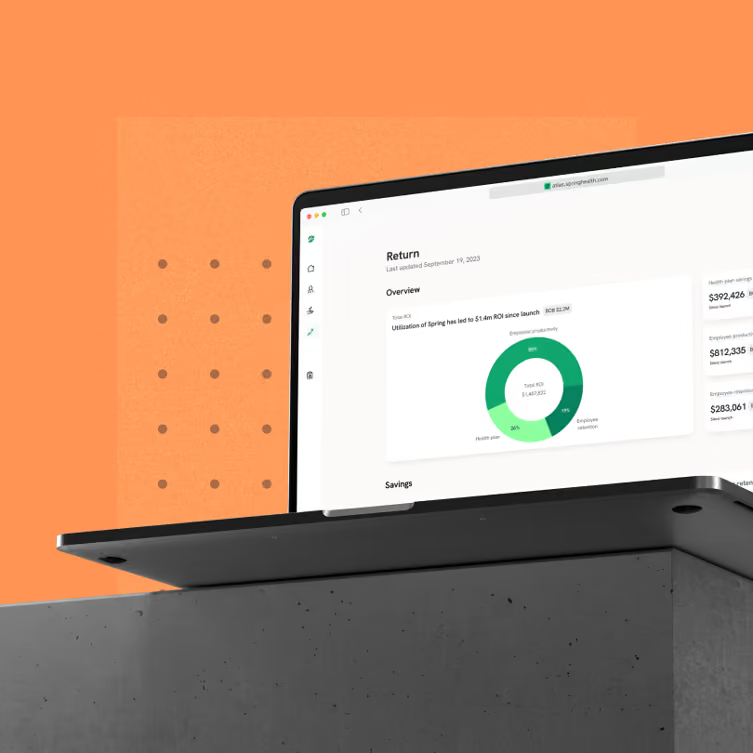
A peer-reviewed JAMA Network Open study found 1.9x ROI, net of program fees, along with a 14% reduction in physical health claims and $1,070 in net savings per participant in Year 1. For HR leaders, that is the business case in one sentence: better mental health care does not just improve the care experience. It can also reduce avoidable costs elsewhere in the plan.
Fact #3: Mental health conditions are treatable. Many people improve with evidence-based care.
Mental health challenges are not always quick to resolve, but they are treatable. Many people improve significantly with the right care, and many others learn how to manage symptoms in ways that help them function, recover, and regain stability over time.
Why it matters
If employees believe nothing will help, they are less likely to seek care. If employers speak about mental health only in terms of crisis or decline, they unintentionally reinforce that belief. It is important to communicate that improvement is possible, support is worth pursuing, and timely care can change outcomes meaningfully.
Fact #4: Prevention and early support can reduce risk and severity
Mental health support works best before a problem becomes acute. Too often, systems wait until someone is in severe distress before offering meaningful care. By that point, symptoms may be more disruptive, recovery may take longer, and the cost to both the employee and the organization may be higher.
Why it matters
Employees with untreated depression incur 149% higher annual healthcare costs than their peers, while proactive behavioral health interventions can reduce physical health claims by 14% and generate meaningful net savings. For employers, early support is not just the compassionate move. It is often the more effective and more cost-efficient one.
Fact #5: Most people with mental illness are not violent
One of the most damaging myths about mental illness is that it makes someone dangerous. In reality, people with mental illness are responsible for only a small share of violent crime and are much more likely to be victims of violence than perpetrators.
Why it matters
This myth deepens stigma and makes discrimination seem more acceptable. It can affect how employees are perceived, how comfortable they feel disclosing a condition, and whether they believe it is safe to seek help at all. Workplace culture improves when mental health is met with accuracy instead of fear.
Fact #6: Mental health affects every workplace
Mental health is not a niche issue affecting only a small portion of the workforce. It is a widespread reality across demographics, industries, levels of seniority, and geographies. Every organization already has employees who are struggling, employees who have struggled in the past, and employees who will need support in the future.
Why it matters
When companies act like mental health is rare or peripheral, they end up normalizing presenteeism, avoidable burnout, and low-grade disengagement. When they accept that mental health affects every workplace, they can build systems that are more resilient, more realistic, and more responsive to what employees actually experience.
Fact #7: Seeking mental healthcare shouldn’t put someone’s job at risk
In many places, including the U.S., employees have legal protections against discrimination related to mental health conditions. But legal protection alone does not remove fear. Many employees still worry that if they use their mental health benefits, ask for accommodations, or take leave, they may be judged, sidelined, or professionally penalized.
Why it matters
Fear is one of the biggest barriers to care. If employees believe using mental health support could hurt their career, many will wait until the situation becomes more severe. Employers can reduce that fear by building a culture where support is normalized, accommodations are handled respectfully, and leaders model that mental health care is a legitimate part of staying healthy and productive.
Fact #8: Mental health and physical health are deeply connected
Mental health and physical health do not operate separately. They influence one another constantly. Chronic stress can show up physically through sleep disruption, headaches, digestive problems, or muscle tension. Physical health challenges can also trigger or intensify depression, anxiety, or emotional distress.
Why it matters
Whole-person care is the correct approach. Employers should not think about mental health as a standalone benefit detached from broader healthcare outcomes. When mental health support is easy to access and clinically sound, it can improve more than emotional wellbeing alone. It can affect healthcare utilization, comorbidities, productivity, and overall workforce functioning.
Fact #9: Mental health access is a real barrier
Wanting help and getting help are not the same thing. Long wait times, provider shortages, insurance confusion, and difficulty finding the right type of care still make mental health support hard to access for many employees. “Just get help” often sounds simple, but in practice, it is often anything but.
Why it matters
When access is slow or confusing, employees do not get early support. They get late support. That delay increases acuity, contributes to leave risk and crisis escalation, and quietly raises medical and pharmacy spend through comorbidities. For benefits leaders, access is not just a feature of a network. It is one of the clearest signals of whether a benefit is truly preventive or merely reactive.
Fact #10: Mental health leaves are a business continuity issue
Mental health leaves do not appear out of nowhere. They are often a downstream signal that something broke earlier: unsustainable workload, delayed access to care, manager capability gaps, or a support system that employees did not trust or could not navigate soon enough.
Why it matters
HR leaders track mental health leaves because they create real operational disruption, from coverage gaps to reduced productivity to more pressure on teams already under strain. But the goal is not to reduce leave by discouraging employees from taking it. The goal is to build a clinically sound, employee-trustworthy pathway that supports timely evaluation, appropriate care, and a more stable return to work. That is what helps organizations reduce repeat scenarios over time.
10 steps you can take to improve organizational support
- Reduce friction to first appointment: Make it easier for employees and dependents to access care quickly, with a clear entry point, fast booking, and guidance through eligibility and next steps.
- Turn leadership modeling into a strategy: Equip executives and people leaders practical language that normalizes care without oversharing or pressuring employees. Then reinforce that through manager training and communication moments that matter.
- Measure mental health like a core business priority: Track utilization, outcomes, time to care, and repeat engagement across employee groups so you can identify stress hotspots early.
- Strengthen clinical quality standards: Vet mental health partners for outcomes tracking, provider quality standards, and measurement-based care rather than relying on access claims alone.
- Design for continuity of care. Support ongoing treatment with fast follow-up, easy rescheduling, clear navigation, and coverage structures that do not create unnecessary drop-off.
- Build crisis-ready support. Confirm you have a clear escalation model, including 24/7 options, vendor protocols, and defined internal roles when someone may be at risk.
- Track leading indicators, not just crises: Monitor early signals like time to first appointment, engagement patterns, and leave precursors instead of waiting for ER visits, major incidents, or absenteeism spikes.
- Normalize support: Talk about mental health benefits as clearly and consistently as you talk about physical health coverage.
- Focus on output: Managers should evaluate employees based on work and results, not on stereotypes or assumptions about health status.
- Offer accommodations: Flexible scheduling, quieter workspaces, time for therapy appointments, and other simple adjustments can make a meaningful difference in helping employees stay supported and productive.
Mental health support in 2026 cannot be built on outdated myths or broad good intentions alone. Employers need an approach grounded in evidence, clinical quality, fast access, and a clear understanding of how mental health affects business continuity as well as employee wellbeing.
The facts are clear: Mental health affects every workplace, access still matters, early support changes outcomes, and the right benefit can deliver measurable value. For HR leaders, the opportunity is to turn those realities into a stronger system, one that employees trust, leaders can support, and organizations can rely on over time.




.png)


.avif)
.avif)


.avif)

.avif)
.avif)
