


Some of us close our eyes, take a deep breath, and count to 10. Others reach into their office drawer and squeeze a tension-relieving toy. Virtually no one, however, is unaffected at some point in their lives by workplace stress.
About 69% of U.S. employees said in a 2025 survey that work-related stress is a significant burden, which is the highest number that survey has seen since the COVID-19 pandemic. The workplace is also the third-most-cited source of significant stress in the U.S.:
- Future of the nation (76%)
- Economy (75%)
- Work (69%)
And this is a challenge for people leaders and HR teams. It’s estimated that each highly stressed employee results in a $12,000 loss in productivity per year. Leading organizations recognize this as an opportunity and are setting the standard for how to best manage workplace stress.
What is workplace stress?
One person’s stress response is another person’s idea of an exciting day on the job. Workplace stress is therefore less defined by a particular situation as it is by our reaction to that situation.
You may find a fast-paced office job with lots of paperwork dull, but another person may get completely overwhelmed by the idea of being stuck inside while being forced to ponder spreadsheets. As an example, studies show that some active duty police officers report feeling very stressed when forced to do excessive paperwork.
However, even though each person’s triggers are unique to them, there are a few commonalities that create workplace stress:
- A feeling of having too much to do and too little time to do it.
- Poor communication between employees and employers, although poor communication among coworkers can be equally problematic.
- Not taking enough breaks, whether that means regular annual vacations or enough time each day to eat a healthy lunch, can contribute to a very stressed-out employee.
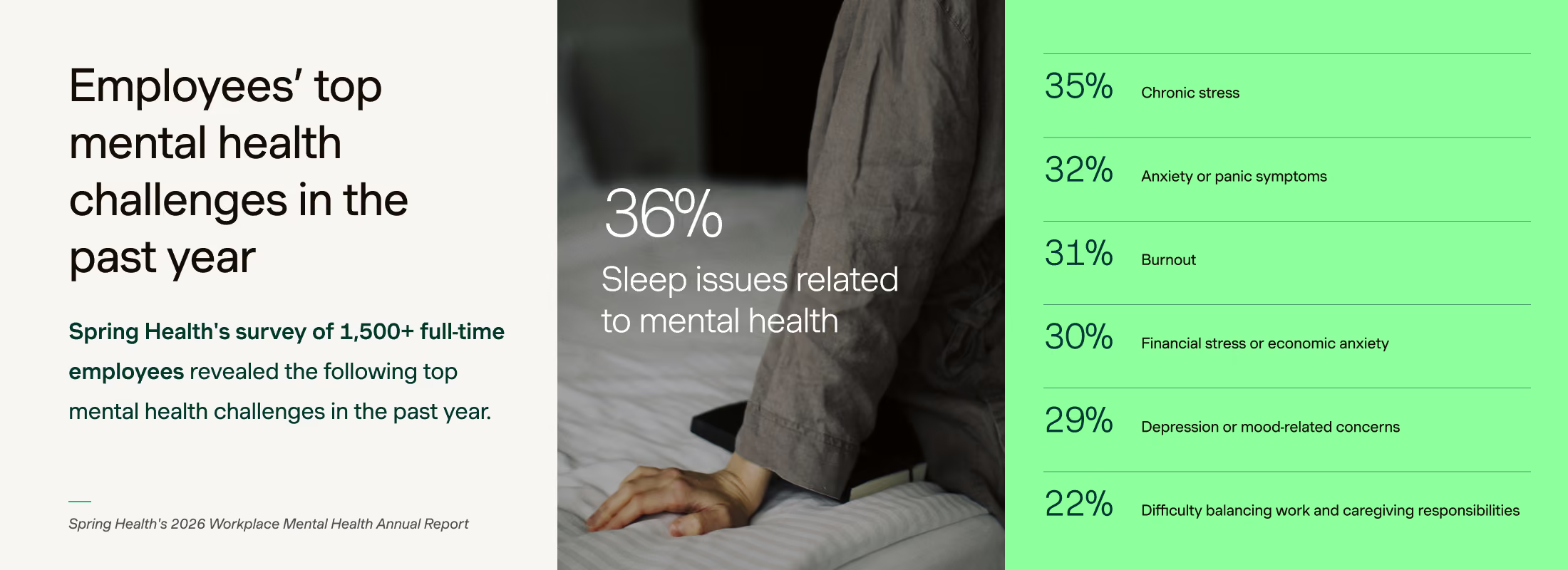
In early 2026, Spring Health surveyed 1,500+ full-time employees across five countries as part of our research for our 2026 Workplace Mental Health Annual Report. When asked what their top mental health challenge was in the past year, the second-most-common answer was chronic stress at 35%. That ranked only slightly behind sleep issues related to mental health.
Tips for reducing workplace stress
Improve communication
Four-fifths of U.S. workers say they are stressed as a result of ineffective company communication. Organizational leaders can sometimes forget that employees don’t know exactly what they are thinking, or are even aware of the many different variables that they deal with every day. A leader may make a decision that she thinks would be obvious to anyone who understood the circumstances behind it.
The problem is that these decisions can sometimes come as shocks to the workforce, especially if the organizational communication is one-sided. While no one can explain every choice they make or indeed tell their employees absolutely everything they’re handling, companies can improve the lines of communication.
To improve communication within the team, let your colleagues know what style of communication works best for you so they have a better chance of expressing their thoughts.
- Do you respond to email, or do you prefer in-person meetings?
- Do you like instant messaging apps, or would you prefer a scheduled weekly briefing?
Whatever form of communication works best for you, be clear about it, and set reasonable boundaries. Team members will benefit from having clear guidelines, and feel less stressed out about giving (and receiving) important information.
Make mental health a workplace priority as part of a holistic approach
Mental health and physical health are closely tied together. Physical health symptoms can quickly manifest into mental health needs, and vice versa. Companies can make it a part of their culture to talk about how to combat or reduce chronic stress, fatigue, anxiety, or depression. Normalizing these conversations can help to reduce mental health stigma. Managers can play key roles in doing this, which is why mental health training for managers is non-negotiable in today’s workplaces.
By raising awareness of mental health through regular communications and offering an enhanced EAP for workers to easily seek personalized, measurement-based care, companies can nip problematic stress in the bud, thereby retaining valuable employees, decreasing absenteeism, and ultimately bolstering productivity.
Take steps to help employees cut healthcare costs
Over 70% of U.S. adults with private health insurance say that healthcare costs cause them stress. An innovative mental health solution should help drive down healthcare costs for employers and employees when utilization increases.
Aside from offering that type of solution, there are other steps employers can take to help employees save on healthcare costs, such as:
- Offering tax-advantaged accounts such as health savings accounts (HSAs) and flexible-spending accounts (FSAs). An employer contribution to employee HSAs can help support healthcare costs and drive participation.
- Implementing wellness programs that incentivize healthy behavior.
- Providing and encouraging the use of lower-cost care such as virtual visits and telehealth options.
Encourage reasonable breaks and vacations
Taking breaks to recharge their batteries is crucial for employees. Unfortunately, U.S. employees are leaving a lot of vacation unused:
- 62% of Americans don’t use all of their paid time off
- 23% of U.S. employees didn’t take a single day of vacation in the past year
For team leaders, it’s important to set an example. Leaders should discuss vacations they have taken or plan to take. They shouldn’t be afraid to discuss how they go home for dinner on a regular basis and stop checking their messages overnight. Everyone will benefit from taking regular breaks and being able to destress and return to work refreshed.
How enhanced EAPs help organizations reduce employee stress
Workplace stress is rarely just an “individual resilience” problem. It’s what happens when people hit a real challenge and don’t have a clear, confidential path to the right support. Enhanced EAPs, such as Spring Health, help employers reduce employee stress by making it dramatically easier for people to get care that fits their needs, then measuring what improves.
With Spring Health, employees and their dependents can start with a short assessment that leads to a personalized care plan. From there, they can access support across the full spectrum, including:
- Self-guided tools for day-to-day stress, sleep, and anxiety—helpful when someone isn’t ready for therapy, or needs support between sessions.
- Coaching, therapy, and medication management matched to the person’s goals, preferences, and clinical needs.
- Care navigation from licensed clinicians who help people find the right next step and reduce friction when life already feels heavy.
- Manager and leader support to help teams build healthier norms, spot early signs of burnout, and respond with confidence.
- Clear reporting and insights for HR and benefits leaders to understand what’s driving stress and where to focus prevention efforts.
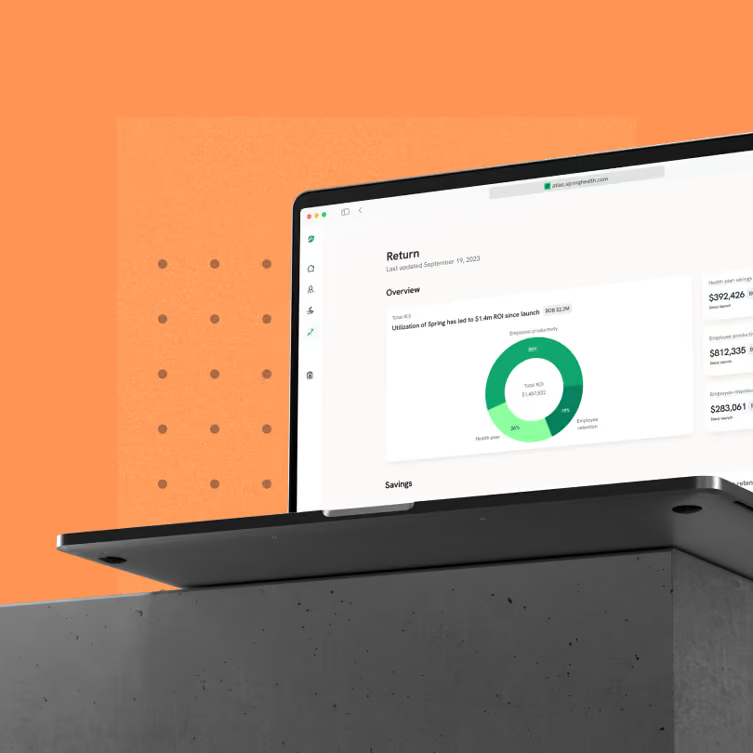
Spring Health uses measurement-based care to track progress and adjust support as needs change. In a peer-reviewed study, Spring Health delivered 1.9x ROI (net of program fees), including a 14% reduction in physical health costs—a signal that when mental health improves, the ripple effects show up across the business.




.png)


.avif)
.avif)


.avif)

.avif)
.avif)
