

.avif)
.avif)
What is employee engagement and why does it matter?
Employee engagement refers to the emotional commitment employees have toward their organization and its goals. Engaged employees are more productive, innovative, and loyal than their disengaged counterparts.
Unfortunately, only 32% of U.S. employees are actively engaged, signaling a critical issue for businesses striving for high performance.
Reduce burnout. Experience results.
Get your guide to learn how to lift up your organization and contain costs with a new approach.
The financial impact of disengagement
Disengaged employees are more likely to underperform, quit, or require additional support, collectively costing the global economy $8.9 trillion—9% of global GDP. Gallup’s landmark study titled “The Relationship Between Engagement at Work and Organizational Outcomes” found tangible benefits to employee engagement including:
- Increased profitability
- Increased productivity
- Decreased absenteeism
- Decreased safety incidents
- And more.
With 62% of the workforce struggling with engagement and U.S. engagement at a decade-low, HR must address this trend now.
The connection between mental health and employee engagement
Understanding the mind-body connection at work
Mental and physical health are inextricably linked. Ignoring this relationship contributes to reduced productivity, higher medical costs, and increased absenteeism. Integrated solutions are crucial to address both dimensions of employee health.
Mental health statistics that impact engagement
| Metric | Data |
|---|---|
| Have or will experience a mental health disorder | 50% of the world’s population |
| Burnout prevalence | 65% of employees |
| Feeling as stressed or more stressed than five years ago | 65% of employees |
| Annual productivity loss due to mental illness | $1 trillion globally |
| Metric | Data |
|---|---|
| Engagement with traditional EAPs | 2–5% |
| Utilization with enhanced mental health care | Up to 600% increase |
Sources:
Half of World’s Population Will Experience a Mental Health Disorder
65% of employees say they experienced burnout in 2023
Mental Health At Work: The Benefits Gap And How To Close It
The $1 Trillion Link Between Mental Health and Economic Productivity
EAP utilization rates can increase without increasing program costs. Here’s how.
How mental health benefits improve employee engagement
Address burnout through mental health support
Burnout affects 65% of employees, with 72% saying it negatively impacts performance. It stems from financial stress, unmanageable workloads, and poor work-life balance. Mental health benefits can mitigate these drivers and support recovery.
Create a supportive workplace culture
Providing mental health leave, as supported by the FMLA and ADA, signals organizational commitment to wellbeing. This reduces burnout and fosters resilience, which in turn enhances engagement.
Expand access to personalized care
Many employees disengage because they feel their needs are not fully met by one-size-fits-all benefits. Enhanced EAPs and personalized care pathways, such as coaching, therapy, and specialty care, ensure employees receive timely, relevant support that builds trust and boosts engagement.
Reduce stigma around mental health
Mental health programs that actively reduce stigma and normalize seeking help foster an open culture. Employees who feel safe to access care are more likely to stay engaged, productive, and connected to their organization’s mission.
Equip managers to support teams
Managers are the first line of defense in engagement. Training leaders to recognize early signs of distress, have supportive conversations, and connect employees to resources ensures mental health benefits are effectively used and integrated into daily work culture.
The cost savings and ROI of an engaged workforce
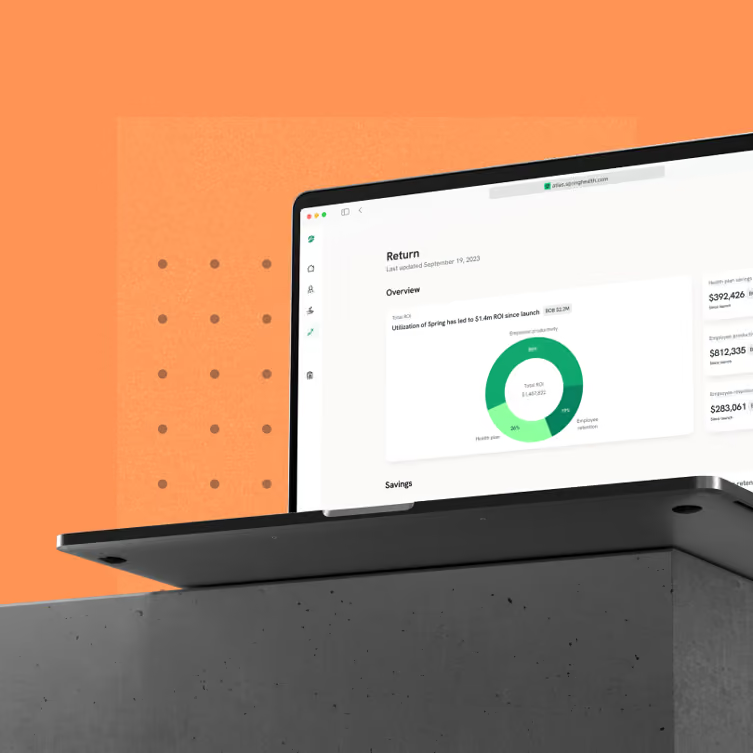
Proactive mental health support reduces absenteeism and turnover, driving tangible ROI. Spring Health customers report an average 1.9x ROI, with savings up to $1,070 per participant in the first year.
There are hard savings, such as in your health plan claims. But there are also soft savings. For example, engaged employees show up ready to contribute. When their mental health needs are addressed, performance and innovation increase. This directly aligns workforce output with business goals.
How mature is your mental health program?
Benchmark your current solution, identify key gaps, and explore best-in-class strategies to elevate mental health outcomes.
Employee engagement ideas for mental health support
Create meaningful work experiences
Disengagement often stems from lack of purpose. Offering meaningful work and reinforcing employee value can reverse this trend. In the current "permacrisis" landscape, wellbeing and purpose must be embedded in daily work.
Build clinical pillars for a thriving environment
Spring Health identifies four clinical pillars to build nurturing environments:
- Access
- Outcomes
- Diversity
- Continuous support
These pillars help prevent emotional exhaustion and create high-performing, mentally healthy teams.
Address HR team capacity issues
With 57% of HR teams over capacity, organizations must adopt scalable solutions that reduce burnout across both HR and the broader workforce. HR leaders need tools that offer proactive, not reactive, support.
Implement comprehensive mental health programs
Integrating engagement efforts with mental health programs bridges the gap between employee needs and benefits access. Best practices include direct scheduling, culturally competent care, and ongoing support through measurement-based models.
Mental health support is essential in driving business results
Mental health benefits are no longer optional. They are essential for improving employee engagement, boosting productivity, and reducing business costs. Engagement is not just an HR initiative; it's a business imperative. Now is the time to close the benefits gap and invest in mental health programs that deliver real outcomes for employees and organizations alike.
Contain costs through better care
Don't overlook the role improved behavioral healthcare can have on containing rising healthcare costs.
FAQ
Q: How can an EAP improve employee engagement?
A: Enhanced EAPs with fast access, personalized care, and measurable outcomes address employee needs more effectively, driving higher utilization and engagement.
Q: Why is employee engagement important for HR leaders?
A: Engagement directly impacts retention, productivity, and business outcomes. It's essential for long-term organizational resilience.
Q: How do mental health benefits reduce costs?
A: They reduce absenteeism, improve chronic condition management, and avoid high-cost interventions like ER visits.
Q: What is measurement-based care?
A: A model that tracks mental health outcomes in real-time and adjusts treatment accordingly, improving quality and ROI.
Q: What are signs your workforce is disengaged?
A: Increased turnover, burnout, reduced productivity, absenteeism, and low benefit utilization are common red flags.
Q: How can my organization best understand employee engagement levels?
A: Employee engagement surveys are a great way to create benchmarking to understand year-over-year engagement levels.




.png)


.avif)
.avif)


.avif)

.avif)
.avif)
