



Walk into almost any office, and you might feel it: the collective sigh, the forced smiles, the general lack of purpose. It's a scene all too familiar for a workforce battling employee burnout. It's tough to witness, and even tougher to live through.
This isn't just a fleeting trend. The reality of a burnout-prone workforce is becoming the norm, not the exception. It might not surprise you, but employee engagement in the U.S. is at a 10-year low. Data from Gallup and other sources points to "The Great Detachment," with only 23% of employees feeling truly engaged at work.
Disengagement isn't just an HR problem. It's hitting the global economy hard, costing a mind-boggling $8.9 trillion – that's 9% of global GDP! But beyond the numbers, it's about people feeling lost, unmotivated, and, frankly, taken for granted.
So what can we actually do about it? It feels like a mountain to climb, but we can start by understanding the landscape and implementing strategies that address both the symptoms and root causes of burnout while rebuilding genuine engagement. We've compiled some ideas to help you understand how to increase employee engagement for a burned-out workforce.
The connection between burnout and employee engagement
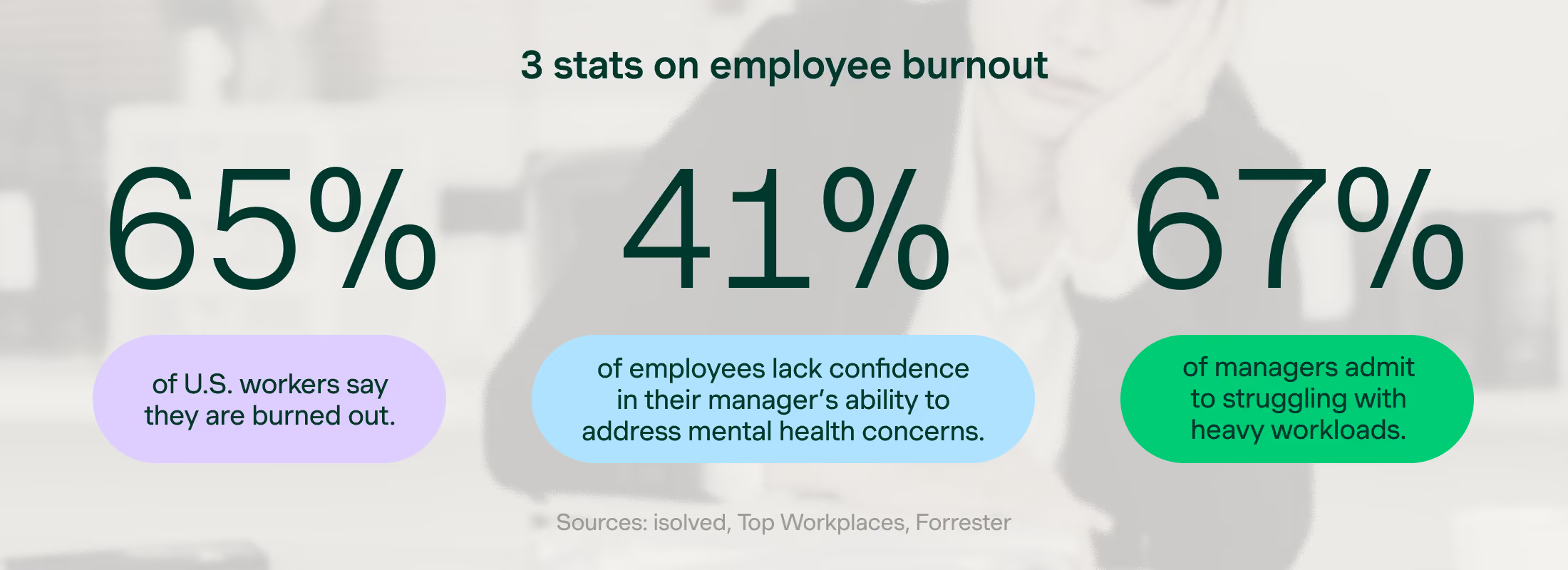
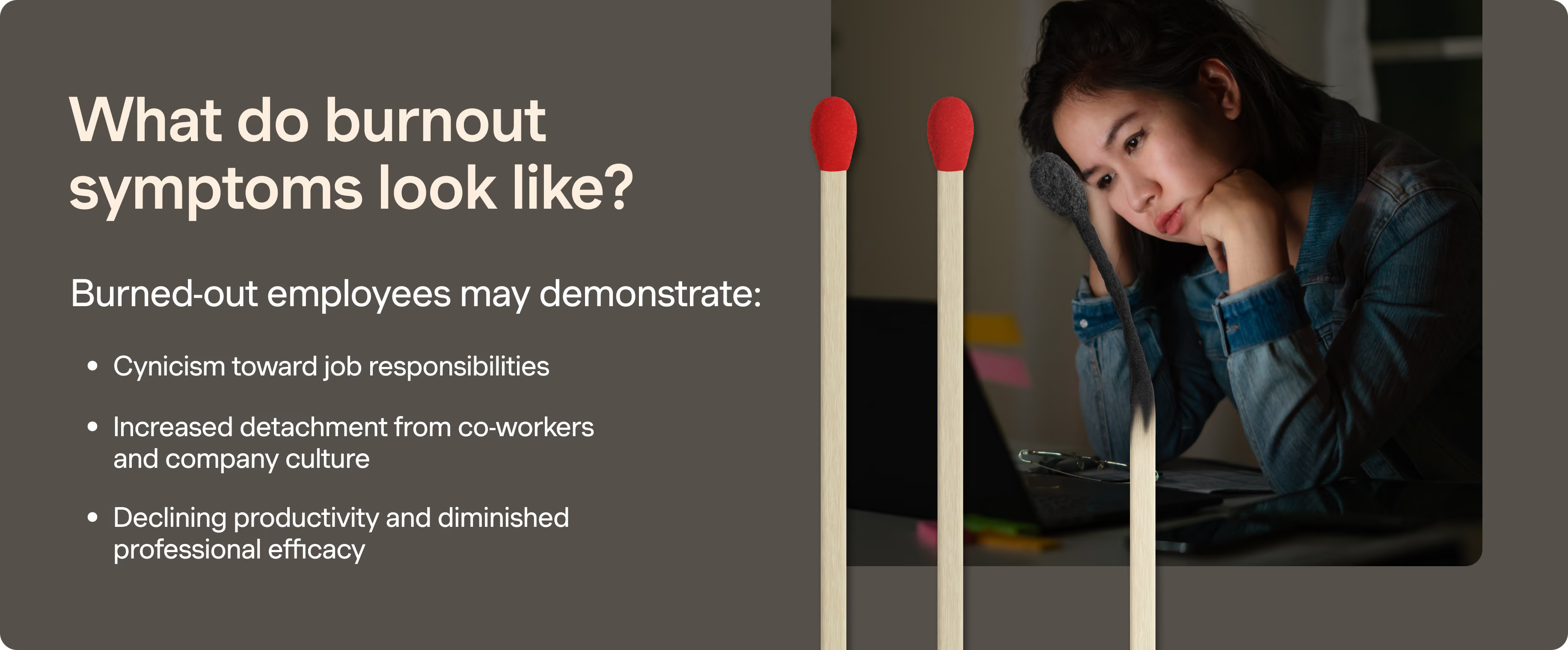
Burnout and disengagement aren't separate issues. They're two sides of the same worn-out coin, feeding a downward spiral. When employees are burned out, they don't just become tired. They become cynical, detached.
The numbers paint a stark picture of how widespread this problem has become:
- 65% of employees are as stressed or more stressed as they were five years ago, according to Forrester’s Q1 2025 Mental Health Benefits survey commissioned by Spring Health
- 52% of employees have felt burned out in the past year alone
- Burnout costs organizations $1 trillion in lost productivity annually
But statistics don't capture the human cost: the Sunday night anxiety, the Monday morning dread, the work stress seeping into personal lives. It's a life problem, not just a work one. And it’s a problem that carries costly health consequences for your employees, too. Understanding this connection is the first step toward creating meaningful change.
The root causes we need to address
Before diving into solutions, we need to understand what's truly driving this epidemic and pushing our teams to the brink. The data reveals several interconnected factors creating this perfect storm of disengagement:
Sources: APA, McKinsey, Microsoft, Gallup
These challenges are interconnected. Financial stress can lead to longer hours, poor work-life balance, and exhaustion that hinders development.
Best practices that actually work
Real engagement for burned-out teams needs a thoughtful, systemic approach that tackles the underlying issues head-on.
1. Build psychological safety first
Psychological safety is the absolute foundation for engagement. Without it, even the best initiatives crumble. Real engagement is possible and innovation flourishes when employees feel safe to:
- Voice concerns without fear of retaliation
- Make mistakes without being shamed or punished
- Ask for help without looking incompetent
- Challenge ideas respectfully and contribute openly
Practical implementation:
- Train managers to respond to problems with curiosity, not blame. Encourage them to ask "What happened?" instead of "Whose fault is it?"
- Create regular check-ins that focus on obstacles and challenges, not just progress. Make it safe to admit when things are hard.
- Celebrate intelligent failures alongside successes, showing that learning from mistakes is valued, not penalized.
2. Address workload reality
You can't "engagement-strategy" your way out of impossible workloads. No team-building exercise will fix an unsustainable pace. Burnout is often systemic, not an individual resilience problem. When 58% of your workforce faces unmanageable workloads, the solution is fixing the system, not teaching better time management skills.
What actually helps:
- Regular workload audits (quarterly, not annually) to truly understand what's on people's plates
- Flexibility to take off as needed to restore oneself and re-charge.
- Accessible, effective mental health benefits to help manage stressors.
- Clear prioritization frameworks for when everything feels urgent, helping teams focus on what matters most.
- Permission to say no backed up by leadership, so employees don't fear repercussions.
- Realistic deadline setting that accounts for human capacity, not just arbitrary project timelines.
3. Invest in professional development
Burned-out employees often crave growth, not less responsibility. They're tired of working hard without getting anywhere. Investing in development shows employees you value their future.
Development strategies that work:
- Skills training that directly relates to career advancement, offering a clear path forward.
- Mentorship programs that connect junior and senior staff, fostering guidance and shared learning.
- Cross-functional projects that expand perspectives and offer new challenges.
- Leadership development for high-potential employees, preparing them for future roles.
4. Create genuine flexibility
Remote work policies were a good start, but true flexibility goes deeper than where you work. It means creating an environment that adapts to human needs rather than forcing humans to adapt to rigid systems.
Real flexibility includes:
- Core collaboration hours with flexible start/end times, allowing for personal appointments and family needs.
- Results-based performance metrics, focusing on what is achieved, not hours logged.
- Mental health days that don't require justification, signaling that well-being is genuinely supported.
- Family emergency policies that actually support families, providing real peace of mind.
5. Foster a culture of belonging
Employees experiencing burnout are 2.8 times more likely to actively search for new jobs and have a 180% increased risk of developing depressive disorders. Clearly, a lack of belonging in the workplace isn't just an inconvenience—it’s a profound risk to organizational health.
You can't mandate belonging or force connections. But you can create conditions where they thrive.
Belonging-building tactics:
- Schedule regular sessions for team members to share personal or professional stories, experiences, and successes.
- Bring members from different departments together for collaborative projects or brainstorming sessions, encouraging deeper, meaningful connections across your organization.
- Encourage employees to share their unique passions or skills through informal "lunch and learns."
- Connect employees from diverse backgrounds, seniority levels, and lived experiences in small groups for meaningful conversations about career growth and personal journeys, building genuine relationships across the company.
- Organize regular opportunities for employees to participate in meaningful community activities together, creating shared experiences and stronger bonds.
6. Check on your managers
Let's talk about frontline managers. They're often caught in the middle, pressured to hit numbers while their teams struggle with burnout. Many companies are realizing that supporting managers is crucial for maintaining engagement during challenging times. They are the direct link to the employee experience, making their role absolutely critical in any engagement strategy.
Managers need support to become effective champions of engagement, not just taskmasters focused on deliverables. When we invest in their development and well-being, the positive effects ripple throughout their entire team.
Manager support essentials:
- Regular manager coaching (not just performance reviews) to help them develop leadership skills.
- Clear escalation paths for team issues, so they know where to turn for help.
- Authority to make decisions that affect their teams, empowering them to lead effectively.
- Their own mental health support and resources, because they're on the front lines, too.
7. Play the long game
The organizations that succeed in this work understand that cultural transformation is measured in years, not quarters. They commit to the long game and understand that small, consistent improvements compound over time into significant cultural shifts.
Consistent leadership commitment:
- Regular leadership check-ins on engagement metrics, showing it's a priority.
- Budget allocation that matches stated priorities, backing up words with resources.
- Leadership modeling of healthy work behaviors, setting the example for the entire organization.
Measuring what matters
Many engagement efforts fail because we measure the wrong things. Engagement surveys are often lagging indicators, telling you what already happened. We need leading indicators to predict future trends, like checking the weather forecast instead of just looking at the puddles.
Traditional engagement surveys have their place, but they're like looking in the rearview mirror while trying to navigate the road ahead. By the time you see disengagement in survey results, you're often months behind the actual problem.
Instead of solely relying on engagement surveys, consider tracking:
These metrics help you spot trends before they become crises, giving you the opportunity to intervene proactively rather than reactively.
When to seek professional help
Sometimes, despite our best efforts, we need specialized support. Organizations are increasingly recognizing that burnout has become a significant business risk affecting not just individual employees, but entire organizational health.
Professional mental health support becomes crucial when:
- Burnout symptoms persist despite environmental changes you've implemented.
- Teams struggle with communication and collaboration, indicating deeper issues.
- Productivity continues declining despite engagement efforts, signaling a persistent problem.
- Employee turnover remains high after implementing changes, suggesting underlying needs aren't met.
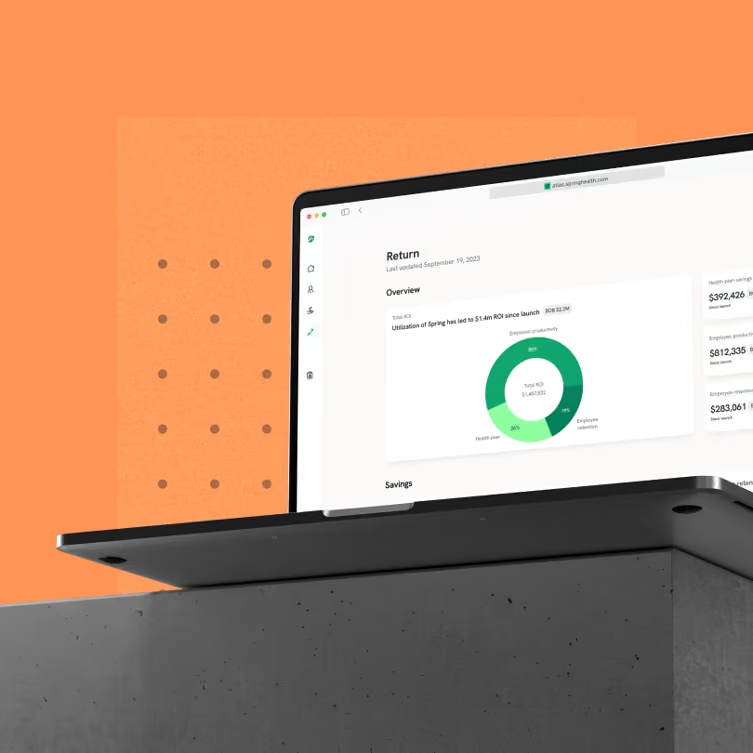
The good news? Modern mental health solutions are designed to be proactive when it comes to employee engagement and burnout prevention. And at Spring Health, the results show up in increased ROI and reduced health plan costs.
For instance, a recent study published in JAMA Network Open demonstrated a 1.9x return on investment for employer-sponsored behavioral health benefits, translating to $1,070 in net savings per participant in the first year alone. This proactive approach can also reduce total medical costs by 4% in year one and 10% in year two, along with significant reductions in physical health costs.




.png)


.avif)
.avif)


.avif)

.avif)
.avif)
