


Blog highlights
- Sleep is one of the clearest early warning signs of workforce distress, but HR teams may be underestimating how many employees are struggling.
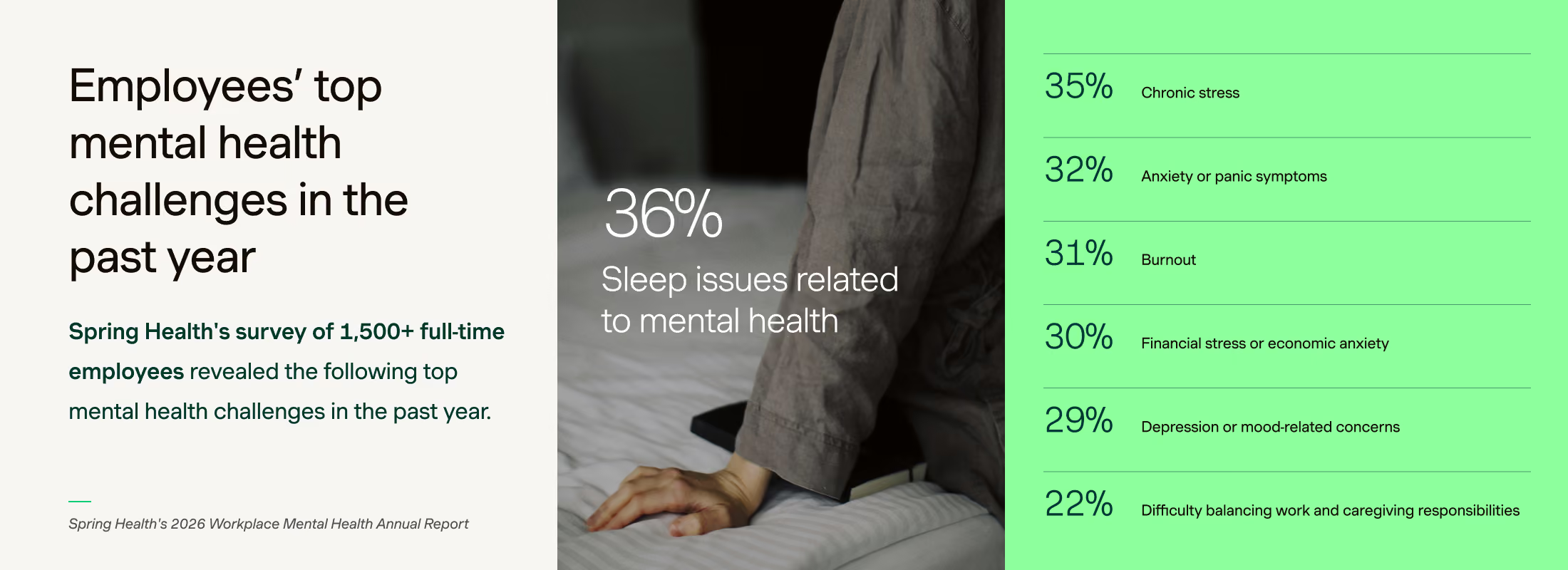
- In Spring Health’s 2026 benchmarking research, 36% of employees said sleep issues related to mental health were one of their top challenges in the past year.
- Sleep issues can point to deeper workforce risks, including chronic stress, burnout, disengagement, leave risk, and emerging mental health needs.
- Organizations can respond by supporting managers, normalizing sleep as part of workforce mental health, offering specialized clinical pathways, and auditing workload norms.
Sleep is one of the clearest early warning signs of workforce distress, but many organizations still underestimate it.
In Spring Health’s 2026 benchmarking research, more than one-third of employees, 36%, said sleep issues related to mental health were one of their top challenges in the past year. HR professionals, meanwhile, ranked sleep only fifth, with 21% identifying it as a major workforce concern. That 15-point gap matters because sleep problems often appear before broader burnout, disengagement, leave risk, or more serious mental health needs become visible.
For HR leaders, this means sleep health should not be treated as a side topic or a personal habit issue. It should be treated as an early workforce signal. When employees are struggling to rest, the organization is often seeing the first visible sign of chronic stress, unsustainable workload, or emerging mental health needs that will become more disruptive and expensive if they go unaddressed.
Spring Health is a global mental health company built on one AI-native platform. For employers, that matters because signals like sleep disruption are most useful when they lead to earlier support, clearer navigation, and access to the right level of care before a problem grows.
The hidden cost: Sleep’s impact on businesses
Ignoring sleep health is not just an empathy problem. It is a productivity, quality, and safety issue. The current article rightly notes that insufficient sleep is estimated to cost U.S. businesses $136 billion in lost productivity each year.
It also points to day-to-day operational consequences, including reduced productivity, more difficulty managing workloads and avoiding mistakes, and higher accident risk for employees dealing with sleep disruption.
The impact on daily operations is staggering:
- Productivity drain: 60% of Americans report a negative impact on their productivity due to poor sleep.
- Error rates: About 60% of workers say poor sleep leads to problems managing workloads and avoiding mistakes.
- Workplace safety: Sleep disruption is a leading indicator of reduced recovery capacity. Sleepy employees are 70% more likely to be involved in a workplace accident than those with enough sleep.
That is why sleep should be viewed as a business indicator, not just a wellbeing topic. When employees are chronically underslept, the organization often sees the effects before it understands the cause: lower focus, more preventable mistakes, slower recovery from stress, and more fragile team performance. By the time those issues show up in turnover, leave, or burnout metrics, the problem is already further along. (springhealth.com)
Watch below: Spring Health Chief People Officer Karishma Patel Buford discusses the impact of sleep and how it's a hidden super-power for employees. Watch the full webinar here.
The link between sleep and mental health
An employee who is experiencing insomnia, for example, may have one or more mental health issues because of a lack of adequate sleep. Insomnia is more than an inability to fall asleep. The Mayo Clinic says this common sleep disorder can “make it hard to fall asleep, hard to stay asleep or cause you to wake up too early and not be able to get back to sleep.”
Insomnia can be caused by many factors including:
- Stress
- A disrupted sleep schedule
- Big meals late at night
- Consuming caffeine, nicotine, or alcohol before bed
- Stimulating activity before bed
- Medications
- Certain medical conditions
- Mental health disorders
Some of these insomnia-inducing issues can be dealt with by lifestyle changes. Others may require the aid of a healthcare professional. Whether the sleep issues are caused by habits or medical problems, a lack of sleep or interrupted sleep can cause several mental health issues including:
- Loss of alertness, concentration, reasoning skills, and problem-solving skills
- Memory problems
- Depression
- Irritability
- Anxiety
- Paranoia
- Suicidal thoughts
Poor sleep can also bring on mental health disorders and exacerbate existing disorders. Employees who have the skills and desire to do their best work can find themselves drained of energy, fighting emotional issues, and performing below their usual skill level when sleep eludes them.
The non-obvious mental health signal
Sleep is often the first thing people disregard when they are under stress. And the relationship between sleep and mental health is bidirectional: Mental health impacts your ability to sleep, and your sleep quality impacts your mental health.
If an employee is struggling with depression, they may sleep too much. If they are under chronic stress, they may sleep too little. There’s also sleep procrastination (also called “bedtime procrastination”), where employees avoid going to bed as a psychological way to delay the arrival of the next workday. When the workday feels unsustainable, the only way to "reclaim" time is to sacrifice rest.
The correlation between sleep issues related to mental health and other mental health challenges showed up in our survey. When compared with those who didn’t say they had experienced sleep issues, those with sleep issues in the past year were:
- Twice as likely to have also experienced trauma/PTSD
- Twice as likely to have also experienced anxiety or panic symptoms
- 1.9 times more likely to have also experienced depression or mood-related concerns
In fact, for every other mental health challenge that employees could identify in the question that they were asked about sleep issues, the rates for the other mental health challenge were higher among employees who had identified that sleep issues related to mental health was a top challenge. That also included isolation/disconnection at work, grief, financial stress, and many more.
Who is at highest risk for sleep issues related to mental health?
Our benchmarking data shows that sleep issues are even more prevalent in specific, high-impact segments of your workforce:
- Managers: 4 in 10 managers report sleep issues, making them nearly 1.5 times more likely to experience this than individual contributors.
- High earners: Sleep issues increased to 42% among employees with a household income of at least $100,000.
- Younger generations: 40% of employees under the age of 55 cite sleep as a top challenge, making them nearly twice as likely to experience sleep issues as those 55 years of age and older (21%).
- Global populations: In India, more than half (53%) of employees cited sleep as a top mental health challenge.
What organizations should do next
1. Support the supporters
Managers were one of the highest-risk groups in the benchmarking data, with 4 in 10 managers reporting sleep issues related to mental health. That makes manager support a strategic starting point. Organizations should make sure managers have practical mental health training so they can notice early signs of distress, respond appropriately, and connect employees to support without trying to diagnose the problem themselves.
2. Normalize sleep as part of workforce mental health
Organizations should talk about sleep as a legitimate part of mental health, not as a private weakness or a side issue. Practical education on rest habits can help, but it should be framed as supportive guidance rather than a substitute for organizational change. If employees are exhausted because the culture is always on, better tips alone will not solve the problem.
- Stay off digital screens one hour before bed.
- Avoid work two hours before bed.
- Avoid eating three hours before bed.
- Avoid caffeine 10 hours before bed.
3. Provide specialized clinical pathways
General talk therapy is not always the answer for chronic sleep issues. Organizations should provide access to specialized tools and therapists trained in Cognitive Behavioral Therapy for Insomnia (CBT-I). High-performing programs use care navigation to route employees to the right level of support before a lack of rest turns into a leave of absence.
4. Audit your workload norms
"Better habits" cannot fix an unsustainable workload. If your employees are reporting high rates of sleep issues, it is a signal to diagnose systemic drivers of distress. Use pulse surveys to map the employee journey and determine if your "always-on" culture is the root cause of your workforce’s exhaustion.
FAQ
Why should HR leaders care about employee sleep health?
Employee sleep health is a workforce signal. When employees are not sleeping well, the organization may see lower focus, more mistakes, reduced productivity, higher safety risk, and earlier signs of burnout or mental health needs. Sleep should be treated as part of workforce mental health, not just a personal habit issue.
How does sleep affect workplace safety?
Poor sleep can reduce alertness, concentration, reaction time, reasoning, and problem-solving. In safety-sensitive environments, that can increase the risk of errors or accidents. For HR leaders, sleep and workplace safety should be connected in workforce planning, manager training, and mental health strategy.
What is the connection between sleep and mental health?
Sleep and mental health influence each other. Stress, anxiety, depression, and other mental health concerns can disrupt sleep. Poor sleep can also worsen mood, focus, irritability, and emotional regulation. That bidirectional relationship makes sleep issues an important early signal for employers to watch.
What can organizations do to support better employee sleep health?
Organizations can train managers to recognize early signs of distress, make sleep a normal part of mental health conversations, provide access to specialized support such as Cognitive Behavioral Therapy for Insomnia, and examine whether workload norms or always-on culture are contributing to sleep disruption.




.png)


.avif)
.avif)

.avif)

.avif)
.avif)
