.avif)
.avif)
.avif)
Mental health isn’t episodic; it evolves across a person’s life. But today’s mental healthcare system is built around isolated moments of care: people find a provider, attend a session, and then are left to figure out what comes next on their own.
When a person changes jobs, switches insurance, or their clinical needs evolve, they are often forced to hit a “reset button” on their care, losing access to their provider and the progress they’ve made. When care resets, people drop off.
This impact is felt even among employee populations: ~60% never book a first session after enrolling, and 1 in 3 attend only a single session.
For employers, that shows up as low utilization, inconsistent outcomes, and rising costs without meaningful improvement. What they need is not just access to care, but continuous engagement in care, so people stay long enough to get better, and stay better.
At Spring Health, we’ve spent the last decade building the AI-native infrastructure to make that possible, connecting every member experience, provider interaction, and outcome on a single platform.
With that foundation, it’s now possible to deliver mental healthcare in a fundamentally different way: one that carries context forward across providers, coverage changes, and life events so care doesn’t reset, and progress isn’t lost.
That’s why we are pleased to introduce Guide, Spring Health’s AI-led experience for employer mental health. Guide supports people across every stage of their journey, helping them start care with confidence, stay engaged, and build progress that lasts.
The impact is measurable. Members supported by Guide see faster improvement in depression and anxiety symptoms, with the greatest gains among those who need care most.
A system built for moments, not for lives
Mental health isn’t something that happens once. It’s something people carry with them across their lives, through stress at work, relationships, family, growth, and change.
But the system was never designed around that reality. It was built for appointments, for isolated episodes, for moments in time, not for what happens between those touchpoints, or how care should evolve as life evolves.
That’s where care breaks down.
A shift to AI-led care
Guide is a fundamental shift in how mental healthcare works.
Instead of care happening only during sessions, support extends into everyday life. Instead of employees having to figure out what to do next, they’re guided to the right next step.
Instead of losing context when something changes, care stays connected.
Guide was built to solve a problem we see every day: people open up, make progress, and then have to start over with a new provider, a new system, or a new moment in life.
Guide changes that.
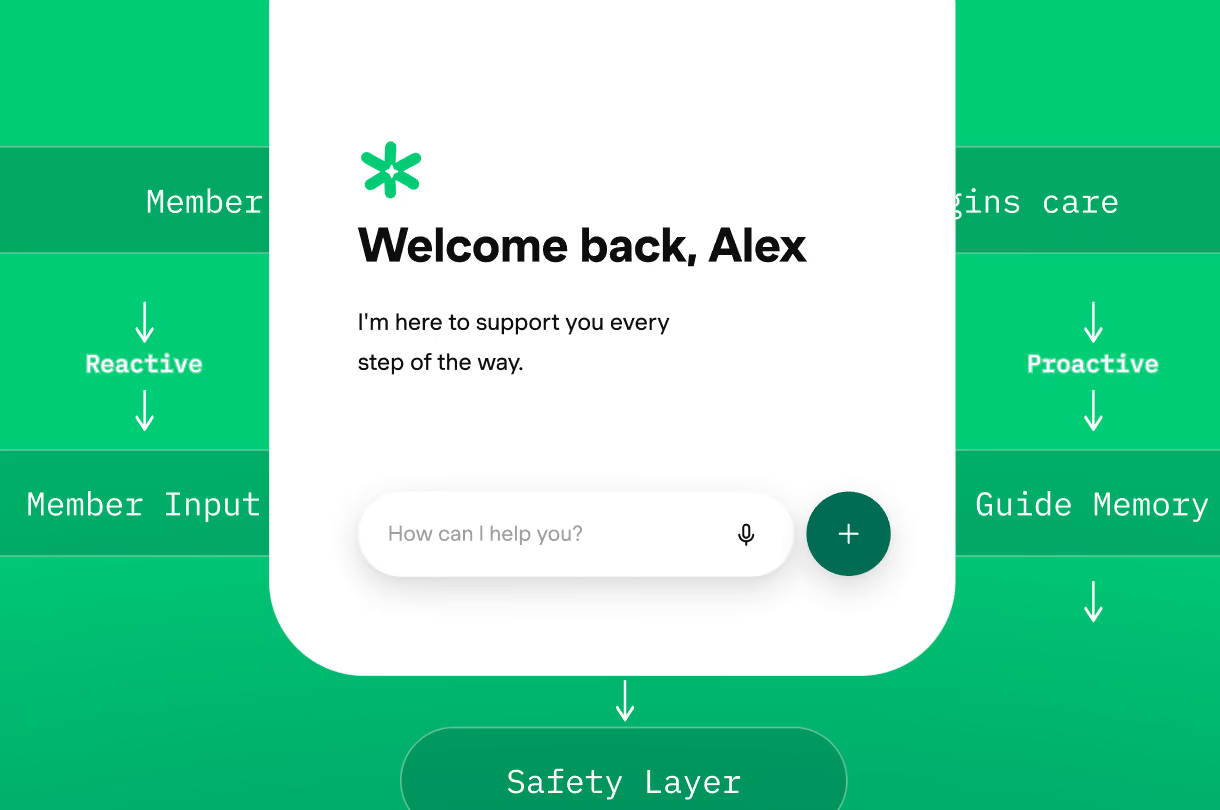
It remembers context, understands what someone is going through, and guides them to the right next step, whether that’s support in the moment or reinforcing what they’ve already learned.
So instead of restarting again and again, care builds.
What makes this possible
Delivering care this way requires capabilities that didn’t exist before: remembering context over time, supporting people beyond individual moments, and learning at scale to personalize for each individual. Guide brings these capabilities to life.
Because everything is connected in Spring Health’s platform, every interaction builds on real clinical context. Members don’t repeat their story, providers see the full picture, and care evolves as life evolves.
What this looks like in practice
Take Maya and her therapist, Gene.
In session, Maya shares that she’s dreading a difficult conversation with her sister. Together, they unpack Maya’s fears and concerns and make a plan to practice the conversation. Later that week, Guide prompts Maya to roleplay that conversation with her sister. In the next session, Maya and Gene don’t start from scratch. Instead, they discuss how the roleplay went, building on work outside their session, turning insight into concrete progress. Guide was made to counteract the moments where care typically breaks, where engagement is either lost or sustained, like the homework that is never completed, the next session that is never scheduled, or the great insight that is lost after a therapy session ends.
Why AI, and why now
AI is already being used for emotional support. In fact, emotional support and companionship is the top use case for generative AI, which means many people are already using AI as their therapist.
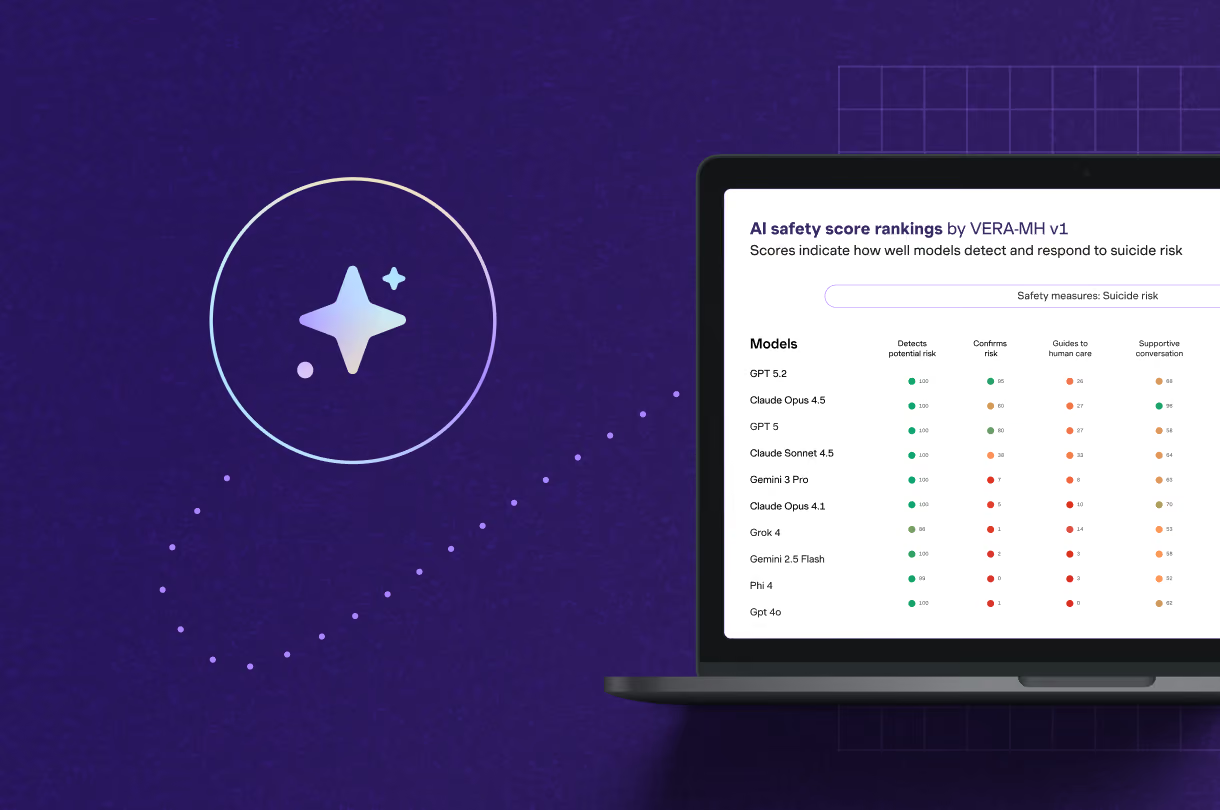
But most of those tools are not designed for mental healthcare. They lack clinical context, safeguards, and integration with real care.
We’ve already seen the consequences, from misleading advice to harmful guidance in moments that require clinical care. That creates real risk for employees in vulnerable moments, and for employers responsible for providing safe, effective support.
The answer isn’t to ignore AI. It’s to build it the right way.
Guide isn’t a standalone chatbot or generic AI that delivers one-size-fits-all answers. It operates inside Spring Health's unified platform, where every member experience, every provider workflow, and every outcome is connected. That means every interaction builds on real clinical context, support is personalized, and care stays coordinated. Members don’t repeat their story, providers see the full picture, and care evolves as life evolves.
A new standard for mental healthcare
Mental healthcare shouldn’t feel like something employees have to manage on their own. It should feel like something that supports them, continuously, simply, and at the moments that matter most.
When Spring Health members are supported by Guide between sessions:
- They stay engaged longer: 60% of members stay consistently engaged in therapy
- They move faster through care: Members book their second session half a day sooner on average
- They see meaningful improvement sooner: Members experience faster improvement in depression and anxiety
For employers, that means a benefit that doesn’t just exist, but actually performs.
Guide changes mental healthcare from something people start into something they stay with. From something episodic into something continuous.
By keeping care connected over time, Guide helps employees move forward instead of starting over, turning mental healthcare into something that actually works.

.avif)
.png)

.avif)


.avif)