.avif)
It's 9 p.m., but the day isn’t done yet.
My wife is on the phone. She's calling our insurance for the third time this week to contest a denial. I'm at the kitchen table auditing a 30-page IEP to compare the accommodations we observe our son getting at school versus what's promised. This is what our second shift looks like, every night. It shouldn’t be this hard. We’re exhausted.
When caregivers become case managers
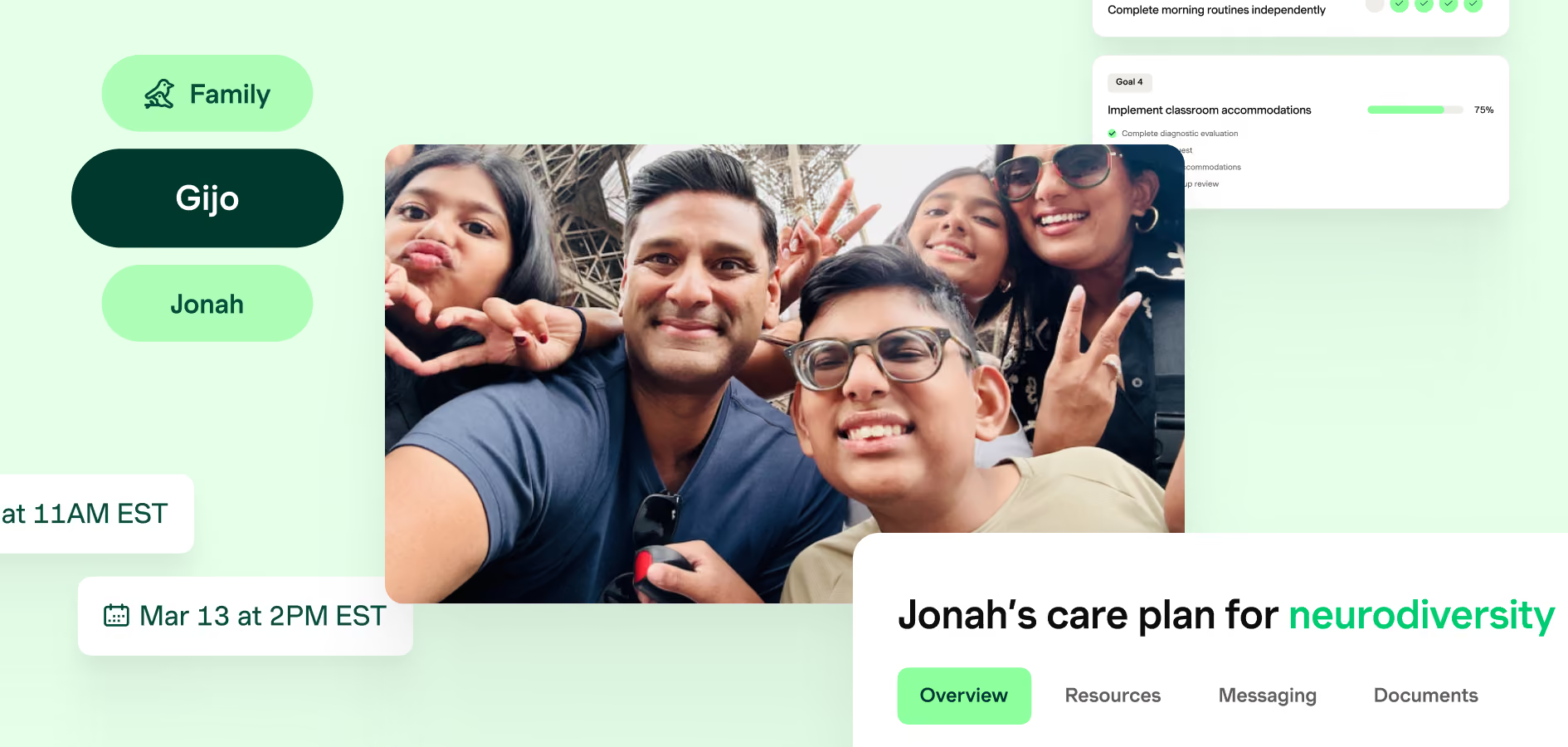
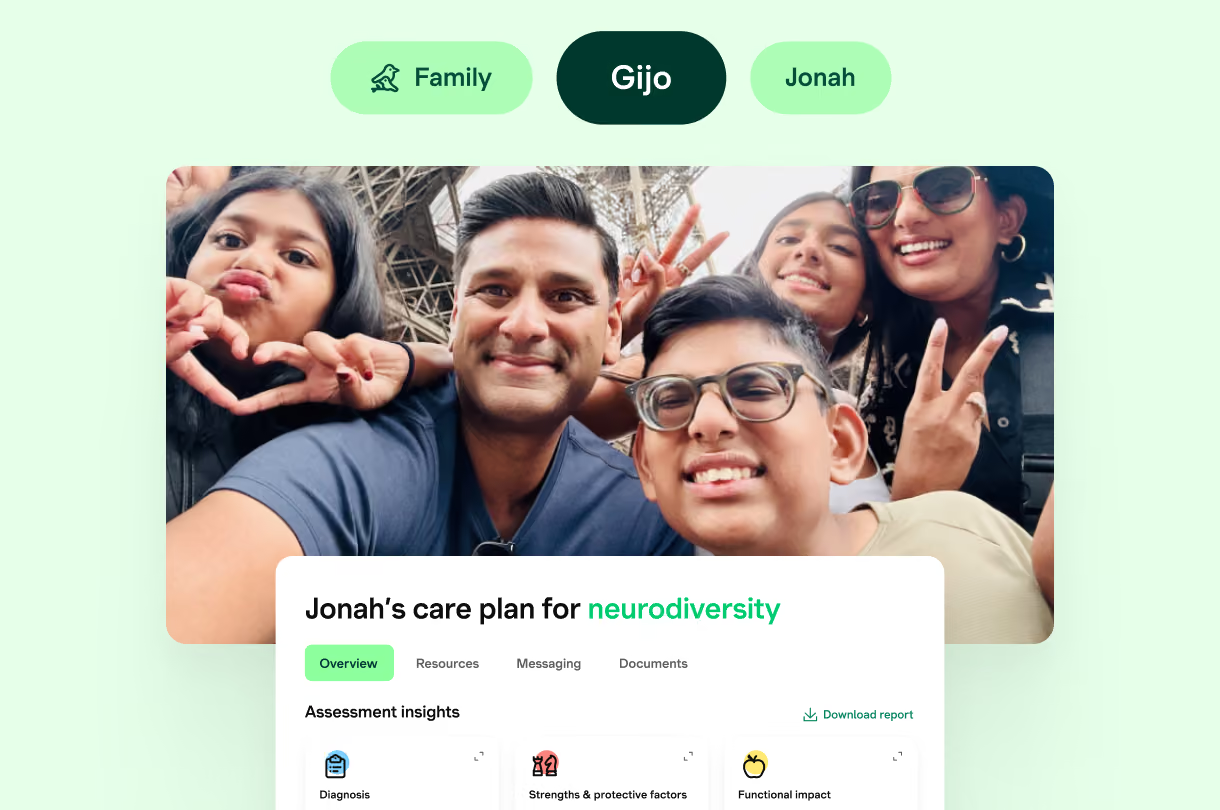
My son Jonah is neurodivergent. So, my wife and I became amateur therapists and care navigators to do what every parent wants to do: make sure our son gets the best support and care possible. What we didn't expect was how much of our energy would go into navigating the system, rather than actually being with him.
We had no choice but to fill the gaps ourselves, like when my wife redesigned his entire high school curriculum. The school had a plan for him. A therapist addressed one piece. A specialist handled another. Everyone in their own lane, while my wife and I held the whole picture together: coordinating, advocating, translating, and somewhere in all of that, trying not to lose sight of just being his parents.
Caregivers are carrying a heavy load
Our family’s story is shared by millions. Families with neurodivergent children are caught in a broken loop of fragmented referrals, year-long waitlists, and expensive out-of-network care. Research shows caregivers spend more than 10 hours a week on care coordination alone, translating to more than $18,000 in lost earnings annually. For employers, the cost of this absenteeism is even higher, with lost innovation and momentum taking a very real financial toll.
It's the specialist's voicemail still sitting on their phone during a 9 a.m. meeting, early school pick-ups, spending their only 30 minute break between meetings fighting an insurance denial, nights spent researching instead of resting. Caregivers of 15 million children with neurodivergent needs, or one in five children in the United States, carry a cognitive weight that depletes their headspace and productivity during the work day.
I know because I live it. Especially when Jonah was younger, there was always a part of my brain occupied by worry: whether a school trip would go well, whether we’d get a call from a teacher, or whether something would overwhelm him. It still happens now, but back then especially, I didn’t fully realize how much that constant background vigilance taxed my focus and reduced the mental space I had available for work and everything else.
What it looks like when a child gets the right care the first time
More than anything, my wife and I wanted to know our son was getting the right care. Spring Health’s Neurodiversity Program delivers this at scale for millions of families.
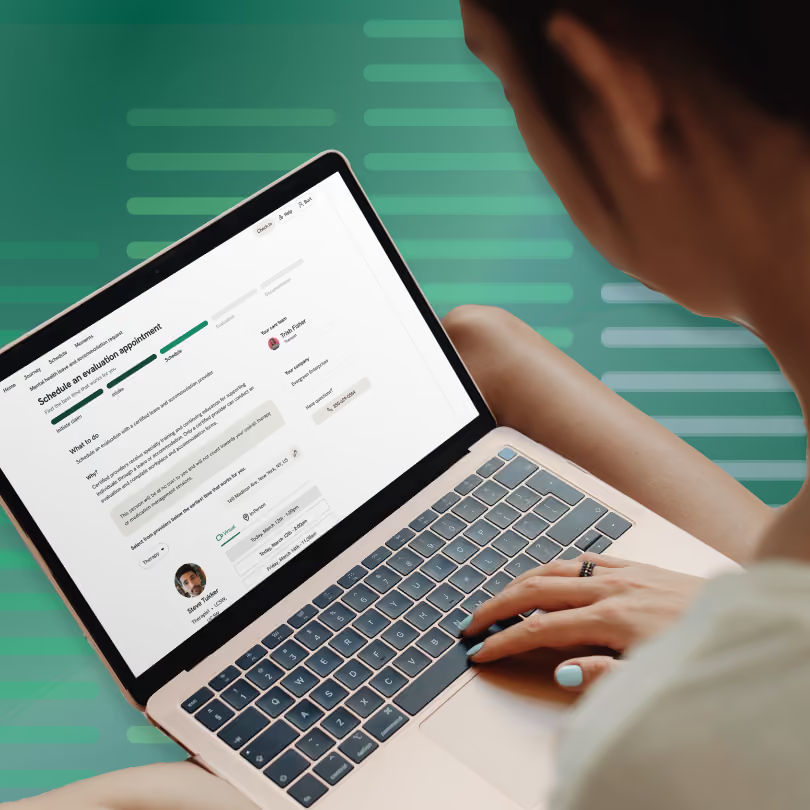
Spring Health guides the family to the right in-network care designed specifically for the child’s needs, so they can thrive at school and home. At the center of that is the Specialty Care Navigator, who quarterbacks all care for the family and manages everything from school paperwork to finding the right in-network specialists. From day one, the child has a dedicated team of specialists to make daily life easier and help caregivers get hands-on tools to feel confident at home and work.
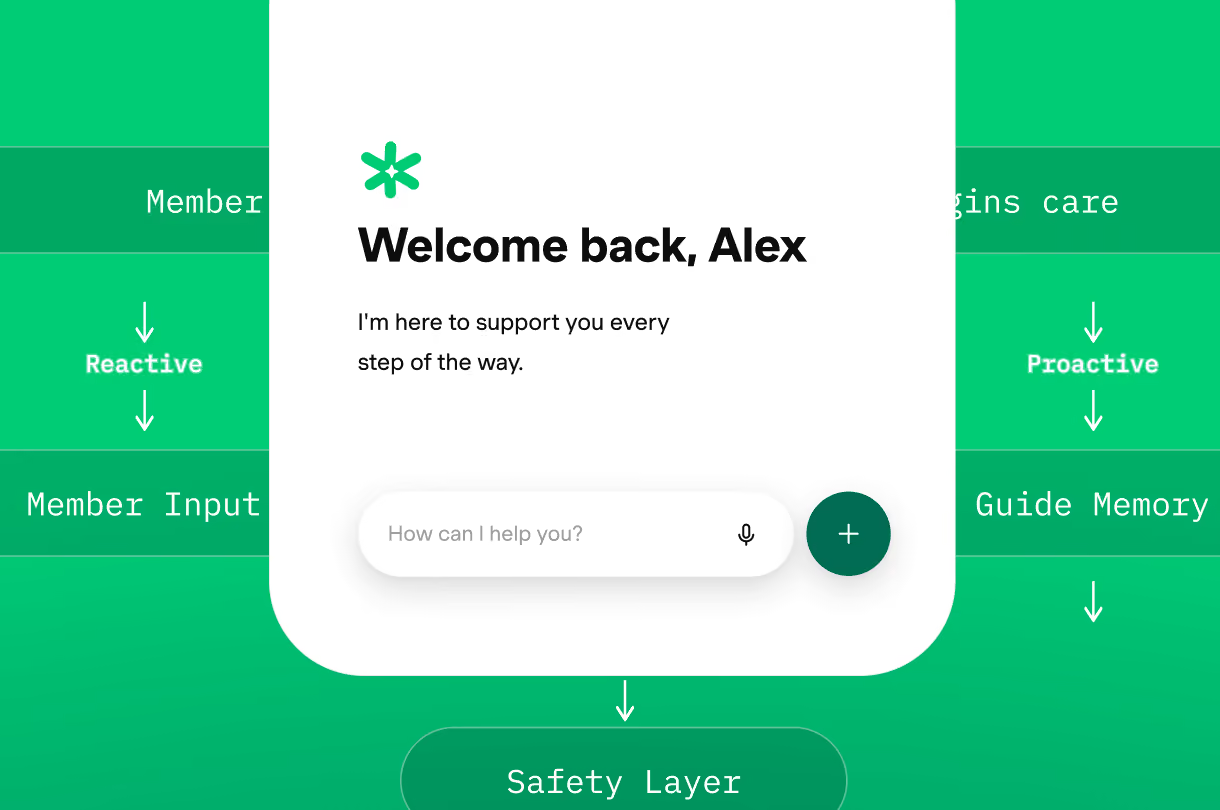
This is all possible because Spring Health is an AI-native platform. Guide, our AI-led experience, connects people to the right care, keeps them engaged, and builds progress that lasts. Families always know what’s next and organizations gain a single source of truth to measure real clinical and financial impact.
We built the technology to take that heavy mental, emotional, and administrative burden off the shoulders of caregivers and deliver care that actually works.
The right care changes everything
You may not have a child with neurodivergent needs. But someone on your team does.
They show up every day carrying something most people around them can't see: the weight of a system that wasn't built for their family and the exhaustion of being the one holding it all together.
Imagine telling that employee they don't have to figure this out alone anymore. That changes what it feels like to come to work. It’s the difference between feeling invisible versus seen, barely surviving versus thriving. And for the team around them, it’s the difference between a colleague who’s half present versus one who’s bringing their best self.
When families have the right care, that 9 p.m. table looks different. There's more room for rest, humor, and joy.
Learn how the Neurodiversity Program can restore productivity for your workforce.



.avif)

.png)

.avif)
.avif)


.avif)