.avif)
Getting someone into mental health care is one problem. What happens after is the difference between getting better or stopping.
This month we shipped things that address that directly. Here's what we built.
What members take home from every session
What we built: After a session, every member now receives a summary of what they worked on and a clear next step. That might be the anxiety trigger they identified, the boundary they're going to try before the next appointment, or the pattern they've been tracking across sessions. It works for all members, whether they're in the app or on web.
Why it matters for employers: The period right after a session is when a member is most likely to book the next one. Members who leave knowing what they worked on get more out of every session. Less time recapping means more time making progress.
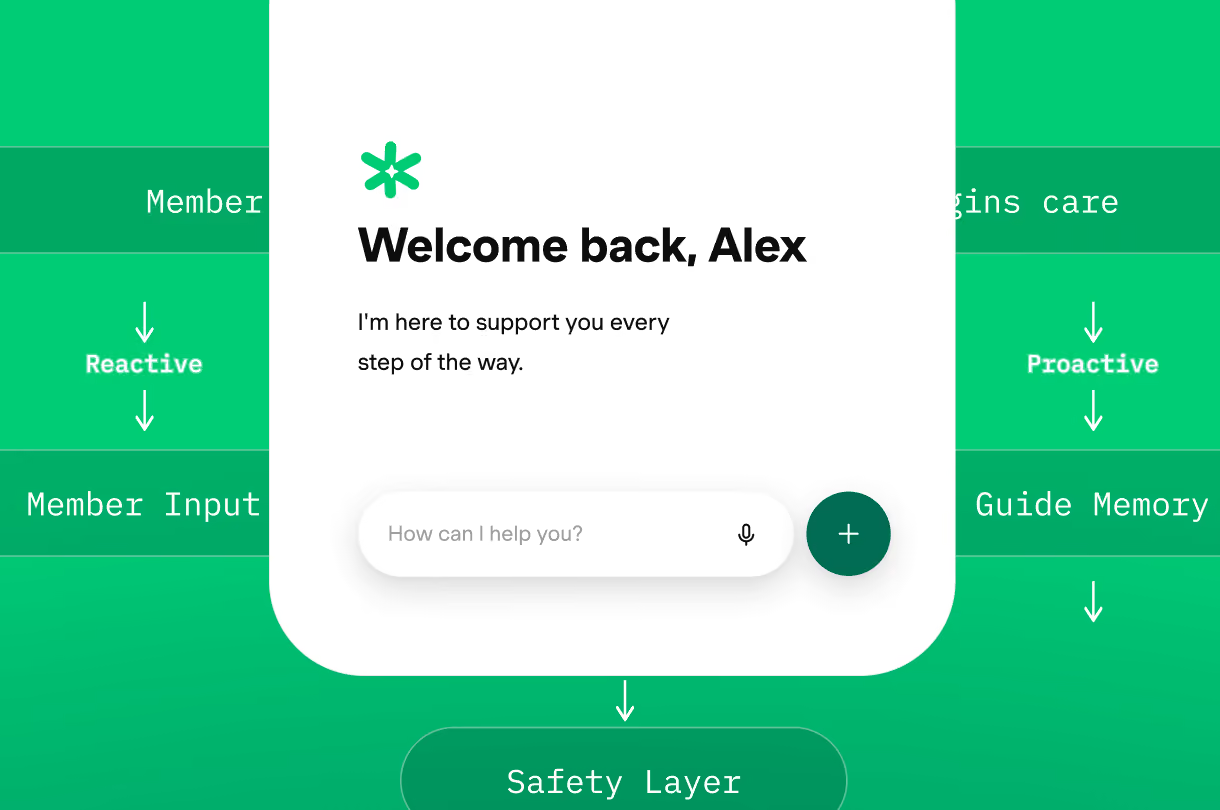
The AI angle: Before this, a session ended and the clinical notes went into the provider's record and members left with whatever they remembered. The AI-generated summary changes that: after every virtual session, the platform produces a structured, readable account of what the member worked on, written for them specifically. It happens after every session, automatically. That's what makes it possible at scale.
No surprises when covered sessions run out
What we built: For members with a set number of sponsored therapy sessions, Spring Health now collects their insurance or payment information during the booking process, before it's needed. Members see a $0 balance throughout their covered sessions. When those end, they know what comes next and care continues.
Why it matters for employers: When covered sessions run out without warning, care stops. Collecting payment information at booking means members are prepared before their coverage changes. Employers can manage utilization without cutting off access mid-treatment.
The AI angle: Precision Care Routing is one of Spring Health's core AI systems. It reads each member's coverage, benefit configuration, and utilization in real time and adapts what they see in the booking flow. This release extends that to payment: the system identifies when a member is approaching the end of their covered sessions and surfaces the payment step at exactly that moment, for that member, automatically. Doing this at the individual level, across a population, is only possible because the system knows each person's situation on its own.
One step from referral to first appointment for neurodiversity care
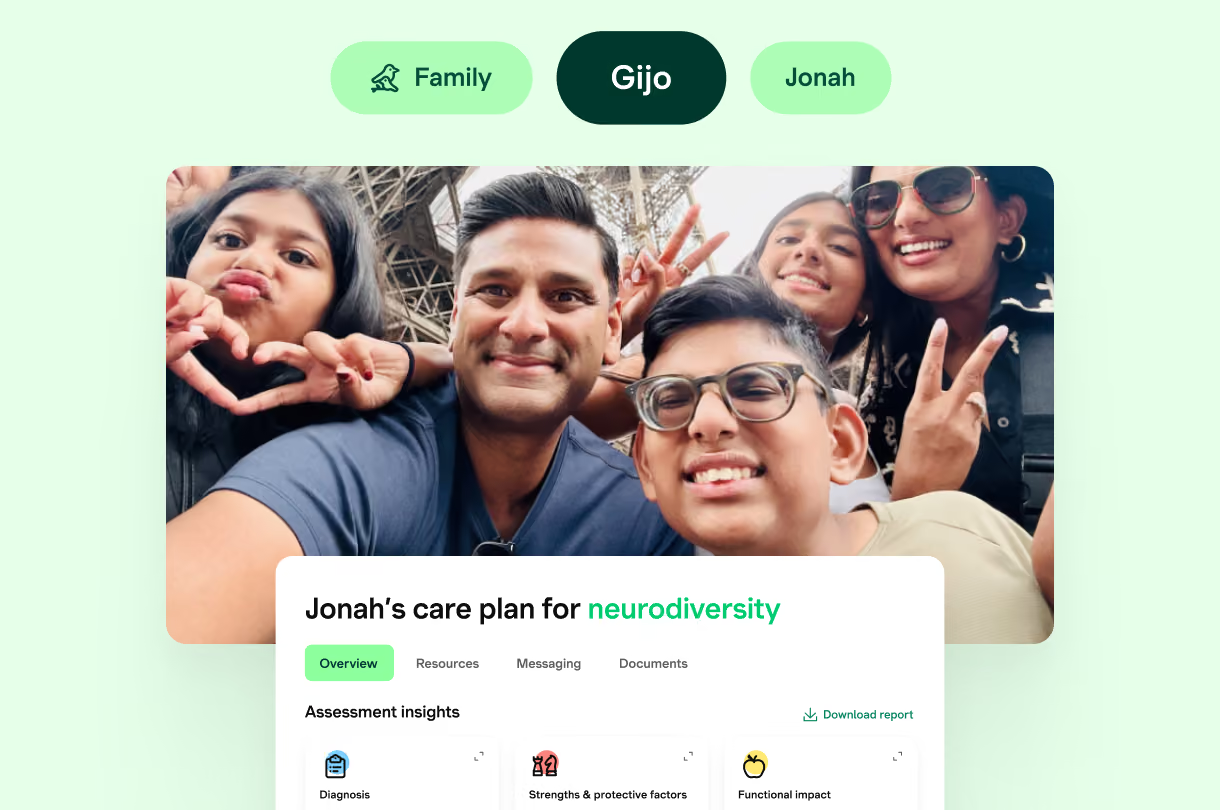
What we built: Providers can now refer a child or teen into Spring Health's Neurodiversity program and book their first appointment with a Specialty Care Navigator in the same step. The appointment is on the calendar before the family leaves.
Why it matters for employers: Getting a neurodivergent child into care can be hard. Coordination typically falls on families, and most systems hand them a referral and expect them to schedule the rest themselves. When a provider completes the referral and the first booking in a single workflow, that burden disappears. For employers offering family benefits, this is the kind of change that determines whether a benefit gets used.
Peer recovery support for teens in substance use disorder care
What we built: Teen members ages 13 to 17 in Spring Health's Substance Use Disorder program can now connect with Peer Recovery Specialists, people who have been through recovery themselves. A Specialty Care Navigator schedules the first appointment. Teens manage follow-ups from there. We took what worked in the adult model and built it into the teen program.
Why it matters for employers: Teen members in substance use disorder care have had clinical support and therapy. Peer recovery adds a relationship with someone who has been through it. For employers offering family benefits, the teen SUD program now reflects the full model of care.
Population data for every team that needs it
What we built: Spring Insights now has permissions that let employers control who in their organization has access to program data. Each person sees data for the population they manage. Nothing outside that scope is visible to them. Version one covers the Homepage, Member Engagement, Utilization, and Workplace Savings pages.
Why it matters for employers: Large organizations have historically had to choose between giving full access to all program data or giving none at all. Scoped access changes that. Benefits leaders can now distribute Spring Insights to every team leader who needs it, without exposing data that isn't theirs.
The AI angle: Spring Insights runs on a decade of outcomes data. Scoped permissions mean that intelligence can reach the people who need it across the organization, from the benefits team to the managers making day-to-day decisions about their people.
How we know it works
Spring Health's outcomes are published and peer-reviewed. 92% of members reliably improved or recovered from depression or anxiety. Members recover 5.9 weeks faster than our leading competitor. Employers experience 21% lower mental health costs and 25% lower physical health costs than matched non-participants over two years.
These numbers reflect what happens when care keeps moving. Members who stay in care, book the next session, and build on what they worked on are the ones who get better faster. July's releases are built for exactly that: making sure nothing gets in the way of the next step.
If you want to learn more about what's new and what it means for your program, reach out to our team.
Thrive at Spring Health
If you're interested in building the mental health infrastructure that routes people to care, keeps them there, and proves it worked, we're hiring across product, engineering, and clinical AI.

.avif)
.png)

.avif)
.avif)


.avif)