


HR and benefits leaders face mounting pressure to protect employee wellbeing while proving that investments deliver measurable business value. The question is not whether mental health matters but whether your current strategy connects employees to care they actually use and produces results you can confidently report to leadership.
We’re excited to share with you the findings of two separate research efforts in Spring Health's 2026 Workplace Mental Health Annual Report, based on surveys of HR/benefits leaders and full-time employees across the United States, Canada, Mexico, India, and the United Kingdom. These benchmarks identify gaps in awareness, utilization, and early intervention before issues escalate into leave, turnover, or performance drag.
About the benchmarking research
Spring Health conducted two surveys to capture both the employer and employee perspectives on workplace mental health. The HR survey included Chief Human Resource Officers, Vice Presidents of Benefits, Benefits Managers, and Human Resource Directors at organizations with at least 500 employees headquartered in five countries. The employee survey included full-time workers aged 18 and older across five countries.
Use this data to compare your internal pulse surveys, leave trends, and utilization rates against these benchmarks. If your numbers fall outside these ranges, it may signal a need to refine your benefits strategy, improve communication, or address specific barriers to care.
The top 10 workplace mental health statistics
Burnout and performance impact
1. 95% of HR and benefits professionals say workplace mental health is somewhat or very important to business strategy in 2026.
Workplace mental health is now a core strategic priority for nearly all HR/benefits professionals, reflecting the growing recognition that mental health directly impacts retention, engagement, and overall business performance.
2. HR leaders estimate 30% of employees are experiencing silent burnout.
Silent burnout is a slow, undetected state of exhaustion that often goes unnoticed until it escalates. Because it does not always result in absenteeism, it is easy to miss. Adding lightweight pulse checks or mental health assessments can help detect strain early.
3. 40% of employees who have experienced burnout report presenteeism (physically present, but mentally checked out).
Presenteeism is a hidden cost, with burned-out employees showing up but not fully functioning. Reduced output, missed deadlines, and disengagement may signal employee burnout as the root cause.
Mental health leaves are rising
4. 61% of HR leaders report mental health leaves have increased in the past year.
This trend is not limited to one industry or geography. Increases in leave often indicate employees are not accessing support early enough.
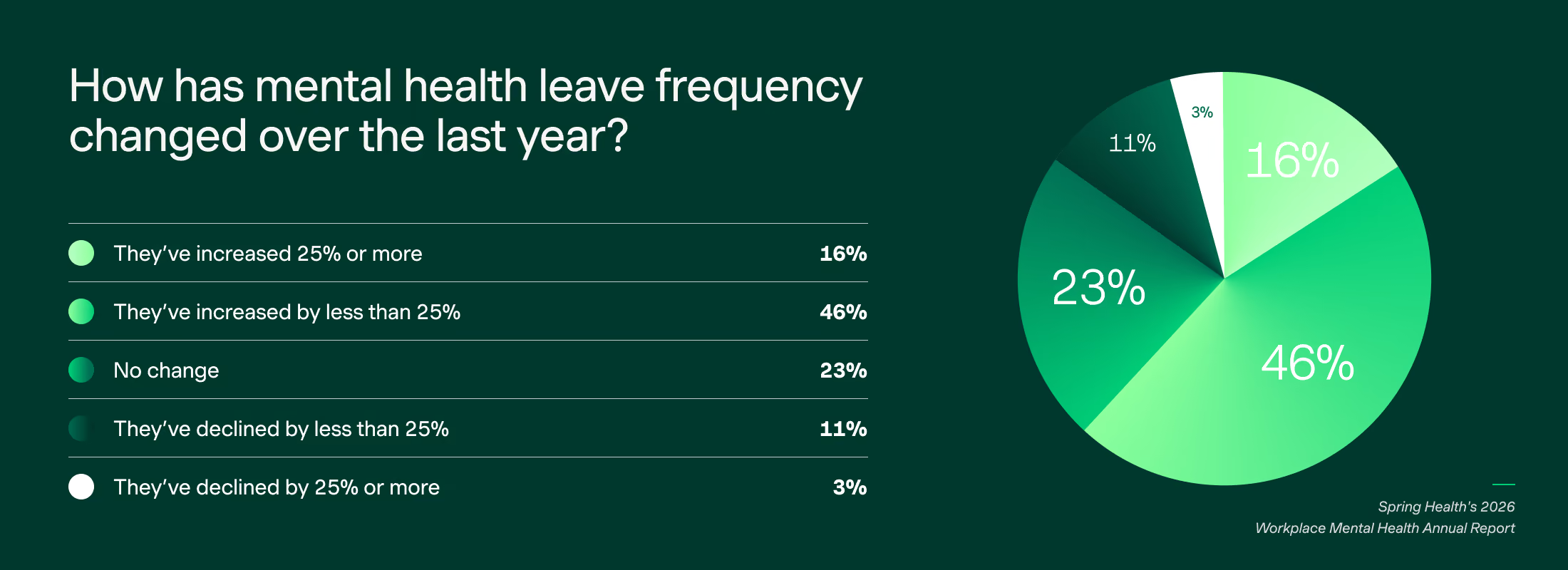
5. 16% of HR leaders say mental health leaves have increased 25% or more in the past year.
Significant surges in mental health leave create operational strain, especially in roles that are difficult to backfill.
Watch below: Spring Health Chief People Officer Karishma Patel Buford shares recent findings from Spring Health's just-published 2026 Workplace Mental Health Annual Report. In a survey of 500+ HR professionals across five countries, 61% said mental health leaves had increased in the past year, while 1 in 6 of all respondents said they had increased by 25% or more. Don't miss the full webinar.
Benefits matter, but awareness and usage lag
6. 69% of employees say mental health benefits are very or extremely important to job decisions.
Mental health benefits are now a critical factor in attracting and retaining talent.
7. 34% of employees say they are not offered mental health benefits or are unsure if they are.
One in three employees does not know whether they have access to mental health benefits, highlighting a significant awareness gap.
Financial stress is a workplace mental health risk
8. 59% of employees say financial stress has increased over the past five years.
Financial stress reduces focus, tolerance, and decision-making capacity.
9. 74% of employees say financial stress has impacted their mental health.
This bidirectional relationship shows the value of integrating financial wellness with mental health support.
Watch below: Hebba Youssef, who is Chief People Officer at Workweek and founder/creator of "I Hate It Here," reacts to recent Spring Health findings that showed that 59% of employees say financial stress has increased over the past five years. She shared the importance of financial literacy and offers suggestions for organizations looking to help employees who are dealing with financial stress. Don't miss the full webinar.
Sleep is the top challenge
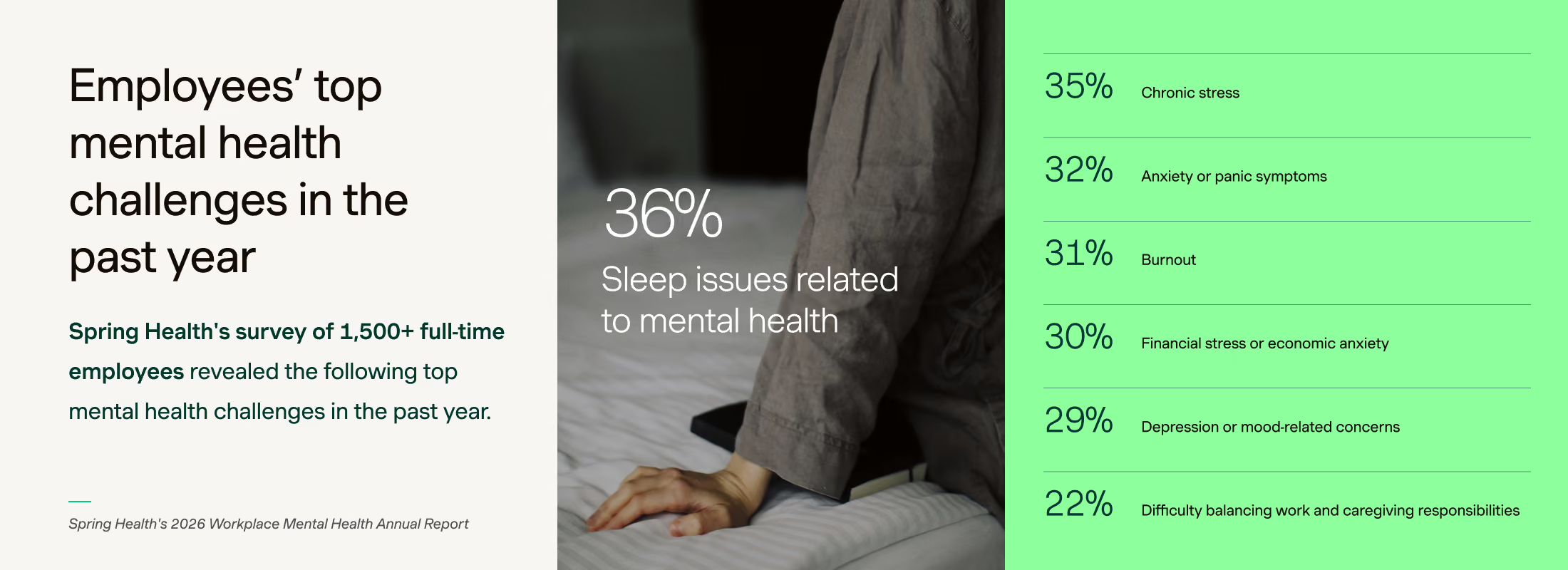
10. 36% of employees cite sleep issues related to mental health as a top challenge in the past year.
Sleep disruption is an early signal of mental health strain and reduced recovery capacity.
Spot gaps and take action
Workplace mental health is a strategic priority, but awareness, early detection, and measurement still lag. Silent burnout is widespread. Mental health leaves are rising. Employees value benefits but do not always know they exist or feel comfortable using them. Financial stress and sleep disruption are early warning signals that HR leaders often underestimate.
Use these 10 workplace mental health statistics to benchmark your workforce. Compare your internal data to these findings. Identify where risk is concentrated. Close the awareness gap. Reduce barriers to care. Equip managers to amplify support. Measure impact with defensible metrics.
And we've only covered a few of the stats from our benchmarking research. Download the full report for more!




.png)


.avif)
.avif)


.avif)

.avif)
.avif)
