

.avif)
.avif)
In Spring Health’s 2026 benchmarking research, 74% of employees said they have experienced burnout, while 61% of HR professionals said employee burnout has increased in the past year. Those numbers make one thing clear: Organizations can’t afford to treat burnout simply as a wellbeing issue.
The data also shows that burnout is not always obvious. HR leaders estimate that about 30% of employees are experiencing “silent burnout,” a slow, less visible form of exhaustion that can show up long before someone takes leave or exits the organization. That makes burnout especially difficult to spot. It drags down performance and is easy to miss.
Below are 12 employee burnout statistics HR leaders should know, what they signal for organizations, and what leaders can do next.
12 employee burnout statistics HR leaders should know
The following statistics originated from Spring Health’s research of 500+ HR professionals and 1,500+ full-time employees across five countries (United States, Canada, Mexico, India, and the United Kingdom). For more of the findings, download your copy of Spring Health’s 2026 Workplace Mental Health Annual Report.
1. 74% of employees say they have experienced burnout
Burnout is the norm, not the exception. In the employee survey, 23% said they are currently burned out and another 51% said they have experienced burnout in the past.
2. 61% of HR leaders say burnout increased in the last year
The trend line is moving in the wrong direction. 16% of HR professionals said they’ve increased significantly.
3. HR professionals estimate that 30% of employees are experiencing silent burnout
Within our research, we defined silent burnout as “a slow, undetected state of exhaustion while maintaining the appearance that everything is fine (e.g. absenteeism, presenteeism, etc.).
4. Nearly 1 in 5 HR leaders think silent burnout affects at least half of their workforce
Averages matter, but this number is even more striking: 19% of HR leaders estimated that 50 or more out of 100 employees are experiencing silent burnout.
5. 40% of burned-out employees report presenteeism
When burned-out employees are physically present but mentally checked out, the organization still pays the cost. This is one of the clearest examples of burnout showing up before it becomes a leave event or a job change.
6. 60% of burned-out employees say they feel emotionally drained or exhausted at work
Emotional exhaustion is one of the most visible signs of burnout in the data, and it aligns with how our Burnout Nation guide defines burnout: A condition rooted in chronic workplace stress that has not been successfully managed.
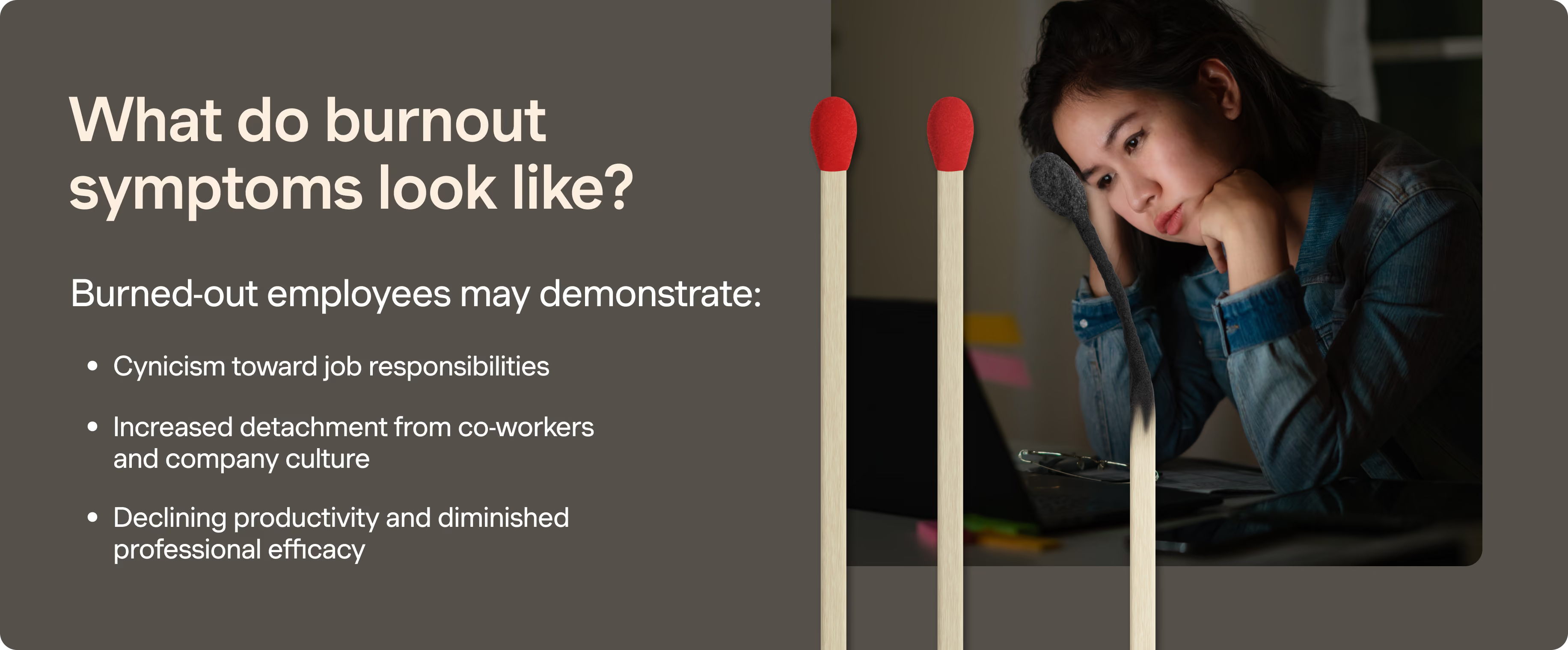
7. 46% of burned-out employees say it is harder to focus or stay productive
This is where burnout shifts from a personal struggle to a business problem. When nearly half of burned-out employees say their focus and productivity suffer, leaders are looking at a direct performance issue.
8. 27% of burned-out employees have considered quitting or job searching
Burnout does not just affect how employees feel. It affects whether they stay. More than 1 in 4 burned-out employees said burnout has made them consider quitting or looking for a new job.
9. Among employees ages 18-34, 27% said they are currently burned out.
Meanwhile, among employees ages 55 and older, that number drops to 16%. That means employees under the age of 35 are 68% more likely to be burned out than those 55 and older. This gap makes burnout a sharper talent risk for organizations trying to attract and keep younger workers.
10. 54% of employees without adequate mental health support say they have experienced burnout in the past year
Employees lacking adequate access to mental health support through their employer were 69% more likely to say they were burned out than those who had access to adequate mental health support.
11. 61% of HR leaders say mental health leaves increased in the past year
Burnout and leave pressure are closely linked in the data. In the draft report, 61% of HR leaders said mental health leaves increased in the past year, and 16% said those leaves increased by 25% or more.
12. In finance, 33% of employees say they are currently burned out
Notably, those in the finance industry had the highest rate of current employee burnout within our survey.
What these burnout statistics mean for organizations
Employee burnout can affect organizations in a variety of ways, including:
- Productivity drag. When 40% of burned-out employees report presenteeism and 46% say it is harder to focus or stay productive, the business feels that in slower execution, more mistakes, lower engagement, and weaker team performance.
- Recruiting/retention challenges. Burnout can lead to rising absenteeism and resignations that make it harder for organizations to hit business goals. According to SHRM, the cost of replacing an employee can cost anywhere between one-half to two times their annual salary.
- Increasing mental health leaves. Within our research, 16% of organizations are experiencing mental health leave increases of 25% or more in the past year. Among those HR professionals, over half (51%) said rising stress and burnout among managers was an emerging trend. That matters because managers are often the first line of defense when employees begin showing signs of strain. If managers are burned out too, the organization loses one of its best early-warning systems.
What organizations should take away from this data
The benchmarking data suggests that the organizations feeling the most pressure from burnout are not treating it like a side issue.
Among HR professionals who say burnout keeps them up at night:
- 70% offer manager-specific mental health training, compared with 35% for those who didn’t say burnout kept them up at night.
- 73% say workplace mental health is “very important” to their business strategy, versus 54% of others.
- 64% track correlations between mental health benefit usage and retention, compared with 45% of others.
Below: On a recent Spring Health webinar, Hebba Youssef, who is Chief People Officer at Workweek and founder/creator of "I Hate It Here," discusses the important role managers play in supporting high performers before burnout becomes a risk. Don't miss the full webinar!
That pattern matters. It suggests that the most burnout-concerned leaders are focusing in three places:
- Manager readiness. Burnout does not stay contained to the individual. It shows up in team dynamics, workload distribution, and day-to-day leadership.
- Strategic visibility. The organizations most attuned to burnout are more likely to treat mental health as part of business planning, not just benefits administration.
- Workforce outcomes. They are not stopping at utilization. They are looking at whether support connects to retention and broader organizational stability.
For employers, the takeaway is not that every organization needs a longer burnout playbook in this moment. It is that burnout becomes easier to address when leaders stop treating it as a soft signal and start treating it as an operational one.




.png)


.avif)
.avif)


.avif)

.avif)
.avif)
