


Blog highlights
- Healthcare employees face unique mental health challenges driven by burnout, trauma exposure, staffing shortages, and the emotional demands of patient care.
- Many healthcare workers struggle to access support for themselves due to time constraints, shift schedules, stigma, and barriers to care.
- Untreated mental health challenges can affect workforce stability, retention, productivity, and patient-facing outcomes.
- Healthcare organizations can better support employees by prioritizing rapid access to care, manager training, and mental health resources designed around the realities of healthcare work.
Healthcare workers aren’t immune to mental health challenges
Healthcare professionals show up every day to care for patients during some of the most difficult moments of their lives.
They work through emergencies, staffing shortages, emotional conversations, long shifts, and situations where the stakes are often measured in lives rather than deadlines.
Healthcare employees are frequently described as heroes.
But they're also human.
Behind every clinician, nurse, technician, administrator, and support staff member is a person navigating stress, exhaustion, and mental health challenges of their own. As healthcare organizations continue to face workforce shortages and operational pressures, supporting employee mental health has become increasingly important for workforce stability and quality patient care.
For healthcare employers, mental health is a workforce strategy
Among healthcare industry members within Spring Health's assessment data:
- 29% screened positive for depression
- 25% screened positive for anxiety
- 18% screened positive for PTSD
- 10% screened positive for an eating disorder
These findings reinforce an important reality: Mental health challenges are not separate from workforce performance. They are part of the workforce experience itself.
Burnout has become one of healthcare's defining workforce challenges
Burnout has been a concern in healthcare for years.
Today, it remains one of the most significant workforce risks facing the industry.
According to research from Spring Health's 2026 Workplace Mental Health Annual Report, healthcare employees are 47% more likely than workers in other industries to cite burnout as a top workplace mental health challenge.
This isn't surprising.
Healthcare employees often navigate:
- High emotional demands
- Heavy workloads
- Staffing shortages
- Administrative burden
- Long or irregular shifts
- Constant pressure to perform at a high level
Over time, these stressors can affect more than morale.
Burnout may contribute to absenteeism, presenteeism, disengagement, turnover, and leave utilization. It can also place additional pressure on coworkers who must absorb coverage gaps, creating a cycle that's difficult for organizations to break.
One of the biggest challenges: Healthcare workers often don't seek care themselves
Healthcare employees spend their careers helping others access care.
Yet many struggle to access care for themselves.
Spring Health's research found healthcare employees are 24% less likely than employees in other industries to turn to a mental health professional for support.
Several factors may contribute to this gap.
Time constraints can make scheduling appointments difficult. Shift work may limit availability during traditional business hours. Concerns about mental health stigma, confidentiality, or professional perception can create hesitation. Some employees may simply prioritize patient care and the needs of others ahead of their own wellbeing.
The result is that mental health challenges can persist longer than they should.
Healthcare organizations often focus on expanding support resources, which is important. But improving outcomes also requires addressing the barriers that prevent employees from using those resources in the first place.
Why traditional mental health support often falls short
Many healthcare organizations offer mental health benefits.
Unfortunately, offering a benefit and creating access are not always the same thing.
Traditional EAPs may require employees to navigate multiple vendors, search for providers independently, or wait weeks for appointments. These barriers can be particularly challenging for healthcare employees working nights, weekends, or rotating schedules.
Healthcare workers need support that reflects the realities of healthcare work.
That means:
- Rapid access to care
- Support available outside traditional business hours
- Simple navigation and triage
- Multiple ways to engage, including phone, text, and digital channels
- Support that spans the full spectrum of mental health needs
When access becomes easier, employees are more likely to seek support before challenges escalate.
Why employee mental health directly impacts organizational performance
Mental health support is often discussed as a people initiative.
In healthcare, it's also an operational imperative.
When employees are struggling and unable to access support, organizations may experience impacts across multiple areas.
- Workforce capacity and productivity. Absenteeism and presenteeism can create staffing gaps, increase overtime costs, and place additional pressure on already stretched teams.
- Retention and staffing stability. Mental health strain is a significant contributor to turnover. In an industry already facing workforce shortages, replacing experienced clinicians and healthcare professionals can be costly and disruptive.
- Patient-facing outcomes. Healthcare is fundamentally human work. Sustained psychological strain can affect employee engagement, communication, patient experience, and overall quality of care.
Supporting employee mental health helps create healthier workplaces, but it also supports the broader mission of delivering exceptional patient care.
Watch below: See how one health systems employer provided better care for their employees, and proved the ROI of doing so.
How Spring Health helps healthcare organizations support their workforce
Healthcare workers deserve mental healthcare that fits the reality of healthcare work: long shifts, emotional strain, trauma exposure, staffing pressure, and limited time to find support.
Spring Health is a lifelong mental health platform that helps healthcare employers connect employees to the right care quickly, measure outcomes over time, and support workforce wellbeing at both the individual and organizational level.
For healthcare organizations, Spring Health can support the workforce through:
- Spring Care, the member experience that includes therapy, coaching, medication management, self-care tools, crisis support, and specialty programs.
- One-to-One Navigation, which helps employees find the right level of care without having to navigate the system alone.
- Fast access to care, including virtual and in-person therapy, so employees can get support before symptoms escalate.
- Specialty care programs for needs that are especially relevant in healthcare settings, including substance use disorder, eating disorders, severe mood and anxiety, trauma support, and tobacco cessation.
- Workplace care, including Integrated Critical Incident Response, Rapid Response, Community Care, mental health leave and accommodations, and connected benefits.
- Manager Training and Development and Manager Consultations, giving healthcare leaders practical support for recognizing strain, responding with care, and connecting employees to resources.
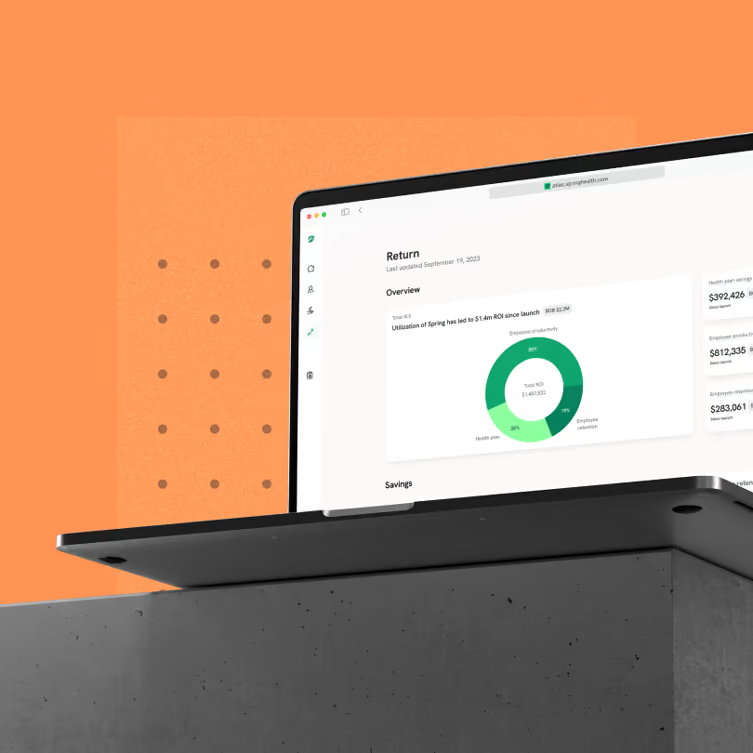
- Spring Insights, the reporting layer that helps employers understand engagement, clinical outcomes, and program performance in real time.
Across all Spring Health members, 92% experience clinical improvement.
Among healthcare employees specifically:
- 85% report improvement in depression symptoms
- 81% report improvement in anxiety symptoms
Spring Health helps employers move from offering mental health benefits to delivering measurable mental health outcomes. Across Spring Health members, 92% reliably improved or recovered from depression or anxiety. Employers also see a 52% reduction in total mental health claims costs.
For healthcare CHROs, that matters because employee mental health is not separate from workforce stability. It affects retention, coverage, productivity, and the quality of care teams are able to deliver. When healthcare workers can access the right support quickly, organizations are better equipped to care for the people who care for everyone else.




.png)


.avif)
.avif)

.avif)

.avif)
.avif)