
.avif)


Blog highlights
- Medication treatment helps people use mental health medication safely and effectively under the care of a licensed prescriber.
- It can support treatment for conditions such as depression, anxiety, bipolar disorder, attention-deficit/hyperactivity disorder, and other mental health needs.
- Medication often works best as part of a broader care plan that may include therapy, coaching, self-guided tools, and ongoing measurement.
What is mental health medication treatment?
Medication treatment for mental health is the process of working with a licensed mental health prescriber to decide whether medication may help with treatment, choose an appropriate option, monitor how it is working, and adjust the plan over time. It is one part of mental healthcare, often used alongside therapy, coaching, self-guided support, and other care.
A medication prescriber may be a psychiatrist, psychiatric nurse practitioner, other physician, or another licensed prescriber, depending on the care model and local regulations.
The provider’s role is to help the person understand their options, weigh potential benefits and risks, and stay on a plan that fits their clinical needs.
Medication treatment is a process that includes asking:
- Is medication appropriate for this person’s symptoms, diagnosis, health history, and goals?
- Which medication or dosage may be the right starting point?
- How is the person responding over time?
- Are side effects, interactions, or adherence concerns getting in the way?
- Should the care plan change?
Strong follow-up care is critical to maximize outcomes in medication treatment. Finding the most effective dose of a medication requires close engagement between the provider and patient. Side effects often need to be managed. Providers and patients often need to collaborate to address barriers to consistent medication use.
How does medication treatment support mental healthcare?
Medication treatment supports overall mental healthcare by helping people find the right treatment plan, monitor progress, and make changes to find the fastest way to recovery.
For some people, medication can reduce symptoms enough to make daily life much more manageable. For others, medication can make it easier to participate in therapy, return to self-care routines, sleep better, or stay engaged in other medical care.
Combining medication treatment with therapy can help both pieces work better. Therapy can help people build coping skills, understand patterns, navigate relationships, and work through stressors. Medication can help reduce symptoms that may make those tasks harder. When the two are coordinated together in the same care system, the care plan can become more practical, responsive, and effective.
Medication treatment may support care for:
- Depression
- Anxiety disorders
- Bipolar disorder
- Attention-deficit/hyperactivity disorder
- Sleep concerns related to mental health
- PTSD
- Substance use disorder, when medication-assisted treatment is clinically appropriate
- Many other conditions
Medication is not the right fit for every person or every condition. A strong care model helps members understand their options and get routed to the level of support that matches their unique needs.
What happens during a medication appointment?
A licensed prescriber typically reviews the person’s symptoms, health history, current medications, treatment goals, side effects, and safety considerations. The provider may prescribe medication, adjust an existing medication, or recommend a different care path.
A first appointment often covers:
- Current symptoms and how they affect work, relationships, physical wellness, and daily functioning
- Mental health history, including previous diagnoses or treatment
- Current and past medications, including what helped and what did not
- Medical history, substance use, and other safety considerations
- Possible side effects or interactions
- Care goals and preferences
- Whether therapy, coaching, or specialty care should be part of the plan
Follow-up appointments usually focus on how the medication is working. The provider may ask whether symptoms are improving, whether side effects are present, and whether the person is taking the medication as prescribed. The provider will consider whether the dosage or medication should change.
The timing of follow-up depends on the medication, the person’s needs, and clinical judgment. Some medications may take weeks to show their full effect. Others require closer monitoring. People should not stop taking prescribed medication without guidance from a health care provider.
Why integrating medication treatment into care plans matters
Integrating medication treatment into a broader care plan helps reduce care fragmentation. That matters for three reasons.
- Mental health needs change. A member may start with therapy and later need medication support when symptoms continue. A care plan should be able to adapt to each person’s needs.
- Medication decisions depend on context. Symptoms, side effects, life events, therapy progress, and medical history all matter. When providers can see the broader care picture, they can make better-informed decisions.
- Employers need more than access. They need to know whether the benefit is helping people get better. Measurement-based care, follow-up, and connected reporting help employers understand care quality and program impact at the population level, without exposing individual member information.
What employers should look for in medication treatment support
Employers should look for medication management support that is clinically sound, easy to access, connected to other care, and measurable at the program level. Key criteria include:
- Fast access to qualified prescribers.
- Virtual and in-person options.
- Integration with therapy and other supports.
- Ongoing follow-up and monitoring.
- Clear escalation pathways.
- Measurement and reporting.
How Spring Health supports medication treatment
Spring Health supports medication treatment as part of Spring Care, the member experience on the Spring Health platform. Spring Care includes therapy, coaching, medication management, self-care tools, crisis support, and specialty programs.
Medication treatment is available virtually and in-person, where offered. Spring Health’s approach is built around connected care:
- Members complete a clinical assessment that helps identify needs and guide care recommendations.
- Precision Mental Healthcare helps match each person to the provider and care approach most likely to help them.
- Care Navigators give members human support when they need help finding their way.
- Providers document care in one shared EHR so it can build across appointments and coordinate care across care teams. .
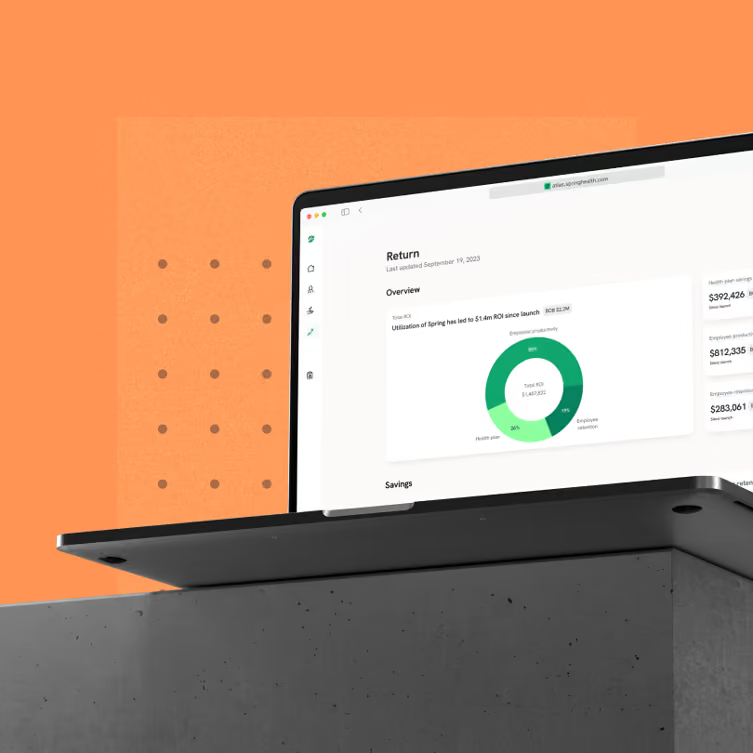
- Spring Insights gives employers and health plans aggregate visibility into engagement, access, and outcomes.
Spring Health also has real-world proof from customer stories. For example, Hearst employees and dependents can make a medication treatment appointment in an average of 1.8 days.
FAQ
What is medication treatment for mental health?
Medication treatment for mental health is care from a licensed prescriber who evaluates whether medication may help, prescribes when appropriate, monitors progress and side effects, and adjusts the plan over time. It is often used alongside therapy or other mental health support.
Is medication treatment the same as therapy?
No. Therapy is usually a structured session with a licensed therapist focused on thoughts, emotions, behaviors, coping skills, and life challenges. Medication management focuses on whether the medication is appropriate, how it is working, and whether the medication plan should change. Many people use both.
Who provides medication treatment?
Medication treatment is provided by licensed prescribers, which includes psychiatrists and psychiatric nurse practitioners.
What should someone expect at a first medication treatment appointment?
A first appointment usually includes a review of symptoms, mental health history, medical history, current medications, previous treatment, goals, and safety considerations. The provider may discuss medication options, prescribe when appropriate, or recommend another type of care.
Does everyone with a mental health condition need medication?
No. Medication is one treatment option, and it is not right for everyone. Some people benefit from therapy, coaching, self-guided tools, specialty care, or other support. A qualified provider can help determine what care plan fits a person’s needs.
Why should employers care about medication treatment?
Employers should care because employees need access to the right level of mental health support, not a one-size-fits-all benefit. Medication treatment can be an important part of care for some members, especially when it is connected to therapy, measurement, navigation, and follow-up.



.png)


.avif)
.avif)


.avif)

.avif)
.avif)