


Blog highlights
- Managers need training, support, and clear escalation pathways.
- Mental health care must be fast, lasting, easy to access, and matched to each employee.
- The strongest prevention plans measure risk before burnout becomes leave or turnover.
A high performer starts missing deadlines by a day or two. A manager who used to be steady goes quiet in meetings. An HR business partner sees the same leave questions, workload complaints, and manager escalations show up again and again.
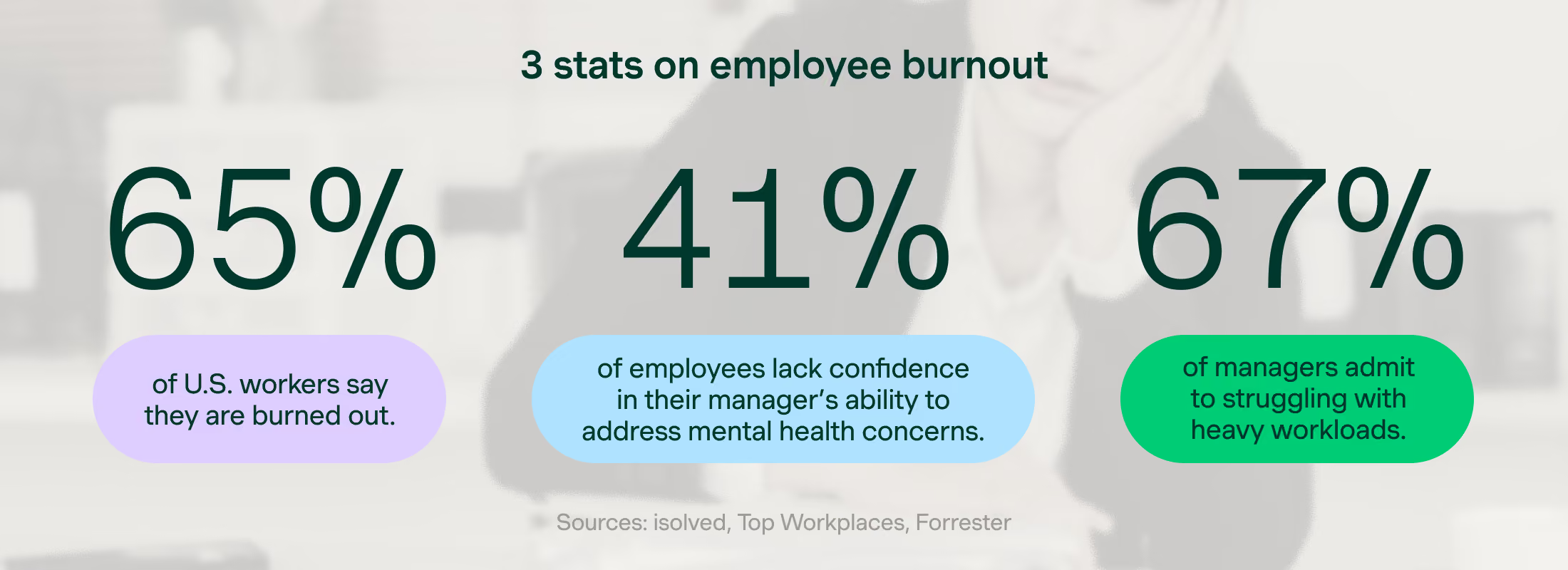
That is often how employee burnout begins inside an organization: Visible enough to affect work, but quiet enough to miss until the cost is already showing up in retention, absenteeism, productivity, and healthcare spend. For HR and benefits leaders, the question is, “How do I prevent employee burnout before it becomes a workforce pattern?”
Let’s examine how to reduce employee burnout with practical, system-level strategies HR leaders can use across benefits, manager enablement, workload design, culture, and measurement.
What is employee burnout?
Employee burnout is a state of chronic workplace stress marked by emotional exhaustion, mental distance from work, and reduced effectiveness. It can look like disengagement, irritability, missed deadlines, lower confidence, or more frequent absences.
Burnout is often treated as a personal problem. For employers, that framing misses the bigger risk. When burnout appears across teams, functions, or manager groups, it usually points to a system issue such as:
- Unclear priorities
- Sustained overwork
- Low autonomy
- Poor manager support
- Mental health care that is too hard to use
How do you prevent employee burnout?
Employers need to reduce chronic workplace stressors, train managers to spot early warning signs, make workloads realistic, normalize rest, and offer fast access to effective mental health care. Employee burnout prevention works best when HR treats burnout as a measurable workforce risk and acts before employees reach crisis.
A practical burnout prevention plan should include these steps:
- Identify early warning signs in engagement, absence, leave, and manager feedback.
- Rebalance workloads before high performers become default backup capacity.
- Train managers to recognize burnout and hold supportive conversations.
- Make mental health care easy to find, easy to start, and matched to the employee.
- Create norms that make recovery, PTO, and boundaries safe to use.
- Measure progress through utilization, outcomes, retention, and claims-cost trends.
Why perks alone do not reduce employee burnout
A wellness stipend, a meditation app, or a single mental health day can be helpful. They cannot compensate for a work environment where priorities constantly shift, teams are understaffed, managers are unsupported, and employees struggle to access care.
That is why preventing employee burnout requires more than adding benefits around the edges of the workday. HR leaders need to look at the conditions that keep pushing employees past capacity. What you really want the answer to is: "What keeps making burnout predictable here?"
1. Make mental health care easier to access
Employees who are exhausted should not have to navigate confusing benefits, long wait times, or dead-end referrals to get help. Burnout prevention depends on care that is easy to start before stress becomes a crisis.
Spring Health members have access to appointments in less than two days on average. That speed matters because early support can reduce the friction that keeps people from getting care. Spring Health is also independently validated by JAMA Network Open and the Validation Institute, with 92% of members reliably improved or recovered from depression or anxiety.
For HR leaders, the takeaway is simple: A mental health benefit is only preventive if employees can use it when they need it. Review time to first appointment, provider availability, navigation support, and whether employees can access therapy, coaching, medication management, and self-guided support through one clear path.
2. Train managers to recognize burnout early
Managers are often the first people who can see burnout forming. They notice when someone withdraws, starts missing small commitments, becomes more reactive, or stops contributing in the way they used to.
The problem is that many managers have never been trained to respond. They may avoid the conversation, try to solve a clinical issue themselves, or pass the whole concern to HR too late. Manager training should help leaders recognize burnout signs, adjust expectations, create psychological safety, and know when to connect employees with professional support.
3. Reassess workloads before burnout becomes the norm
Burnout often grows from a simple pattern: The people who do excellent work receive more work. Over time, high performers become the backup plan for every gap in staffing, planning, or execution.
HR and business leaders can reduce employee burnout by making workload review part of the operating rhythm. Look for teams where work consistently exceeds capacity, where priorities are unclear, or where the same employees absorb every urgent request.
Practical workload questions to ask:
- Which teams are relying on the same employees to carry urgent work?
- Where are deadlines slipping because priorities keep changing?
- Which roles have expanded without added time, support, or decision authority?
- Where are managers asking for resilience when the real need is prioritization?
Below: On a recent Spring Health webinar, Hebba Youssef, who is Chief People Officer at Workweek and founder/creator of "I Hate It Here," discusses the important role managers play in supporting high performers before burnout becomes a risk. Don't miss the full webinar!
4. Build recovery into the culture
PTO policies do not prevent burnout if employees feel punished for using them. The same is true for flexible work, mental health days, or meeting boundaries. Policies only help when the culture makes them safe.
Leaders can make recovery more credible by modeling time off, avoiding praise for overwork, protecting focus time, and asking managers to plan coverage before employees reach exhaustion. The point is not to make rest a special exception. It is to make recovery part of sustainable performance.
5. Create fair, connected teams
Employees are more vulnerable to burnout when they feel invisible, undervalued, or stuck. A team can have reasonable workloads and still burn people out if recognition, growth, and decision-making feel unfair.
HR leaders can strengthen employee burnout prevention by listening for patterns in engagement surveys, exit interviews, manager feedback, and employee relations cases. Look for signals that people do not trust decisions, do not see a future at the company, or do not feel safe asking for help.
6. Measure burnout prevention like a business strategy
Burnout affects the metrics executives already track: retention, productivity, absence, healthcare costs, and manager effectiveness. Treating burnout as a measurable business risk helps HR move the conversation beyond concern and into action.
For benefits leaders, the measurement plan should connect employee experience to clinical and financial outcomes. Spring Health is independently validated by the Validation Institute for achieving meaningful clinical outcomes and net savings. Employers using Spring Health have seen a 52% reduction in total mental health claims costs.
Measure what matters:
- Time to first mental health appointment.
- Benefit utilization and repeat engagement.
- Clinical outcomes and reliable improvement.
- Absences, leaves, and turnover trends.
- Manager confidence and training completion.
- Employee feedback on workload, fairness, and support.
Burnout prevention is a workforce strategy
Employee burnout prevention is not a one-time campaign. It is the daily work of designing a healthier operating system for people through clearer expectations, better manager support, faster access to care, and stronger measurement.
When employers make that shift, they protect more than morale. They protect retention, productivity, healthcare spend, and the trust employees need to keep doing strong work.
About Spring Health
Spring Health is a global mental health company built on one AI-native platform so care follows individuals across every job, move, health plan, and life stage. Independently validated by JAMA Network Open and the Validation Institute, Spring Health reaches 170+ million people worldwide through leading employers and health plans.
FAQ
What is the best way to prevent employee burnout?
The best way to prevent employee burnout is to reduce chronic workplace stressors and make support easier to access. Employers should review workloads, train managers, normalize recovery, and offer mental health care employees can start quickly.
How can HR reduce employee burnout?
HR can reduce employee burnout by measuring early warning signs, supporting managers, improving benefit access, and helping leaders address workload and culture issues. HR should not be expected to diagnose employees or act as a clinician.
What are the signs of employee burnout?
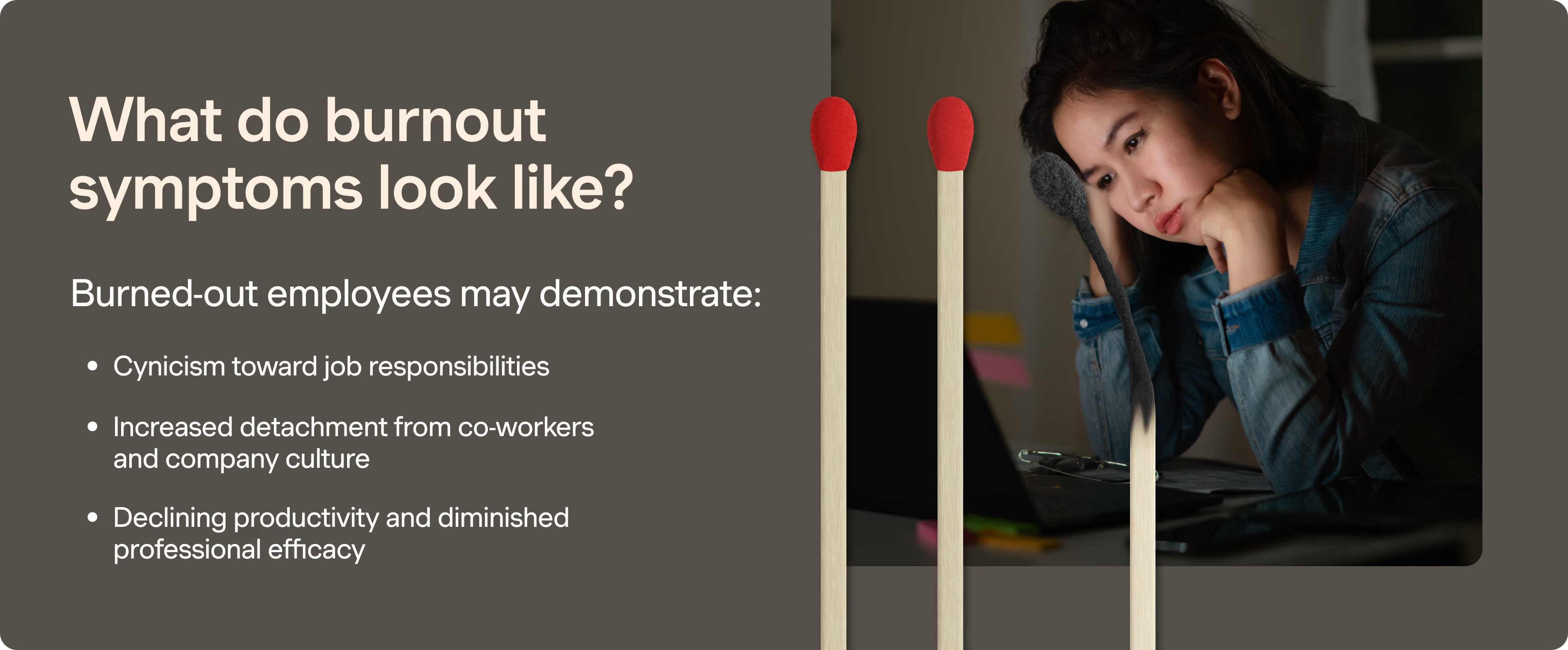
Signs of employee burnout can include emotional exhaustion, withdrawal, irritability, missed deadlines, lower confidence, reduced performance, and more frequent absences. Patterns across teams may point to a broader work-system issue.
Why is employee burnout prevention important for employers?
Employee burnout prevention matters because burnout can affect retention, productivity, absenteeism, healthcare costs, and team trust. A prevention strategy helps employers act earlier and protect both people and business performance.




.png)


.avif)
.avif)


.avif)

.avif)
.avif)
