


Key takeaways
- Employee burnout is a response to chronic workplace stress that has not been successfully managed.
- The clearest symptoms are exhaustion, cynicism or detachment, reduced efficacy, presenteeism, absenteeism, and declining work quality.
- The most common causes are unsustainable workload, low control, unclear expectations, poor recognition, unfairness, values conflict, and weak support.
- Employers should reduce avoidable workplace stressors, train managers, respond to accommodation and leave needs, and connect employees to confidential mental health support.
Employee burnout shows up before a resignation, a leave of absence, or a claim. It starts in smaller signals:
- A high performer who stops speaking up.
- A manager who cannot make one more decision.
- A team whose deadlines keep slipping even though everyone is online.
For HR and benefits leaders, employee burnout is no longer a culture issue sitting at the edge of work. It is a workforce risk tied to retention, productivity, absence, healthcare costs, and organizational stability.
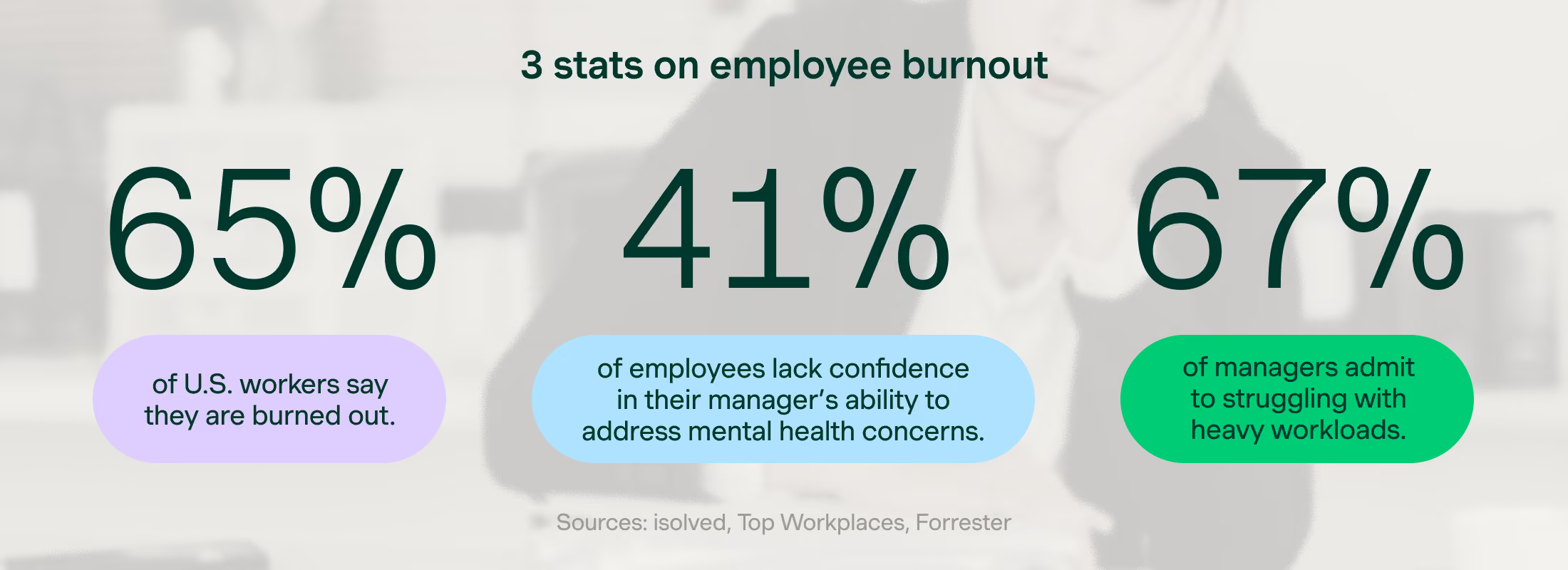
In Spring Health research for our 2026 Workplace Mental Health Annual Report, 61% of HR leaders said employee burnout had increased in the past year, and 48% said it was the top challenge employees faced.
This guide explains what employee burnout is, the symptoms HR teams should watch for, the most common employee burnout causes, what employers' duties may include, and how to deal with employee burnout at the individual, manager, and organizational levels.
What is employee burnout?
The World Health Organization (WHO) defines burnout as a syndrome conceptualized as resulting from chronic workplace stress that has not been successfully managed. It is important to note that this definition places the responsibility on the environment and management of stress, rather than solely on the individual.
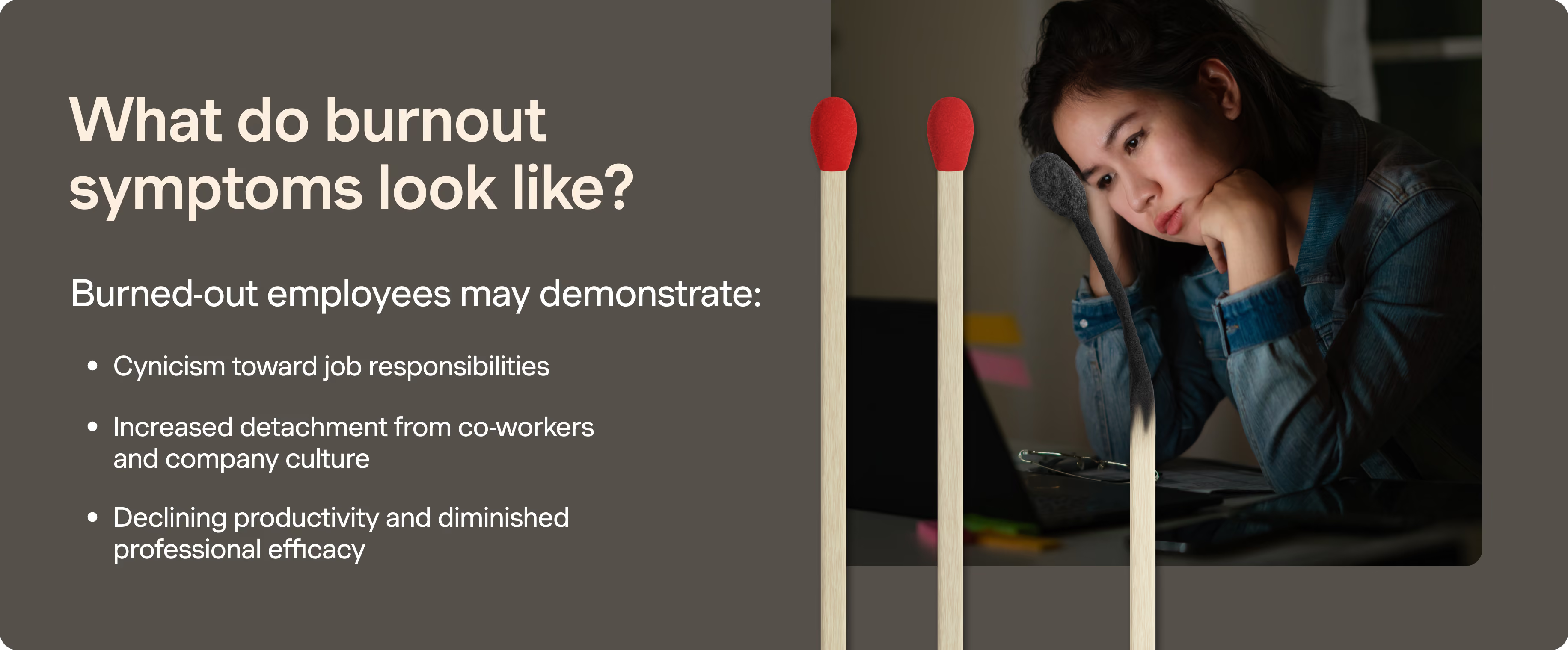
Burnout is characterized by three distinct dimensions:
- Exhaustion: Feelings of energy depletion or exhaustion.
- Cynicism: Increased mental distance from one’s job, or feelings of negativism or cynicism related to one's job.
- Inefficacy: Reduced professional efficacy.
Burnout is not a personal weakness or a sign that an employee lacks resilience. It usually reflects a mismatch between sustained job demands and the resources, support, clarity, autonomy, or recovery time available to meet them.
Burnout is also not the same as stress. Stress often feels like too much: too many demands, too much pressure, too many things competing for attention. Burnout often feels like too little: too little energy, motivation, hope, control, or connection to the work.
Employee burnout symptoms HR teams should recognize
Employee burnout symptoms can be emotional, cognitive, physical, and behavioral. Spring Health asked employees as part of our research for our 2026 Workplace Mental Health Annual Report what their top burnout symptoms were:
- Feeling emotionally drained or exhausted at work (60%)
- Finding it harder to focus or stay productive throughout the day (46%)
- Being physically present but mentally checked out (40%)
- Taking more sick days or personal leave (31%)
- Being less engaged or enthusiastic at work (31%)
Signs of employee burnout managers can spot early
Managers are often the first people close enough to notice burnout risk. They should not diagnose employees or ask for private medical details. Their role is to notice work-related patterns, open a supportive conversation, adjust what they can control, and connect employees to the right resources.
- The employee who used to volunteer ideas has gone quiet for several weeks.
- A reliable employee begins missing deadlines or making uncharacteristic mistakes.
- A manager's team relies on constant overtime to meet normal expectations.
- A team member cancels one-on-ones, avoids camera-on conversations, or withdraws from collaboration.
- A high performer stops taking time off, even when they have available paid time off.
- A team shows rising conflict, low trust, or a pattern of last-minute escalations.
Please note: If an employee expresses hopelessness, mentions self-harm, or appears to be in immediate danger, follow your organization's crisis protocol and connect them to emergency or professional support. HR and managers should not attempt to diagnose or treat a mental health condition.
Employee burnout causes: What usually drives the problem?
Employee burnout causes are usually structural, not isolated. Burnout risk rises when employees face sustained demands without enough control, clarity, recovery, fairness, recognition, or support.
- Unmanageable workload: The volume, pace, or complexity of work exceeds realistic capacity.
- Low autonomy: Employees have little control over how work gets done or which priorities matter most.
- Unclear expectations: Employees cannot tell what success looks like or what should be deprioritized.
- Reward mismatch: Effort is not matched by recognition, growth, compensation, or meaningful feedback.
- Weak community: Employees experience conflict, isolation, low trust, or poor manager support.
- Perceived unfairness: Workload, opportunity, pay, or accountability feel inconsistent or inequitable.
- Values conflict: Employees feel pressure to act against their standards or the organization's stated values.
- External stressors: Financial stress, caregiving, grief, health concerns, sleep disruption, or life transitions compound workplace strain.
The practical lesson for employers is simple: Burnout prevention cannot sit only with the employee. Individual habits matter, but workload, expectations, manager behavior, and access to care often decide whether stress becomes burnout.
What are employers' duties regarding employee burnout?
At a practical level, employers should focus on four responsibilities.
- Provide a workplace free from serious recognized hazards and comply with occupational safety and health standards. OSHA describes employer responsibilities this way for workplace safety generally.
- Respond appropriately when an employee requests support because of a mental health condition. The EEOC states that employees may be entitled to reasonable accommodation for a mental health condition that substantially limits a major life activity, unless the accommodation creates significant difficulty or expense for the employer.
- Handle leave requests correctly. The U.S. Department of Labor states that the Family and Medical Leave Act provides job-protected leave for eligible employees of covered employers to address qualifying mental health conditions.
- Protect confidentiality and avoid discrimination or retaliation. HR teams should document requests through the appropriate process, keep medical information separate from routine personnel files, and involve legal counsel when a burnout-related concern may involve accommodation, leave, safety, wage and hour, or state-specific requirements.
Please note: This section is informational and is not legal advice. Employers should consult legal counsel for decisions about specific employees or policies.
How to diagnose burnout risk across your organization
A better approach to reducing burnout combines employee listening, benefits data, absence trends, manager signals, and workload indicators. Here are a few HR metrics to track and signals to watch for:
- Absenteeism: Rising sick days, Monday or Friday absence patterns, or uneven absence by team.
- Leave of absence volume: Increases in mental health-related leave, short-term disability, or repeat leave requests.
- Presenteeism: Lower productivity, slower work cycles, and visible disengagement without formal absence.
- Turnover hotspots: Attrition concentrated under specific managers, roles, locations, or tenure groups.
- Engagement survey shifts: Declining scores on workload, support, psychological safety, trust, and manager effectiveness.
- PTO utilization: Employees or teams that rarely take time off despite high workload.
- Overtime and staffing gaps: Recurring overcapacity signals that leaders normalize instead of fixing.
- Benefits engagement: Whether employees know what mental health support exists and can access it quickly.
Segment the data. Aggregate averages can hide the teams where burnout risk is highest. Look by manager, role type, tenure, location, shift, region, and business unit. The goal is not surveillance. The goal is to find the places where work design and support systems are breaking down.
How to reduce employee burnout prevalence
To reduce or prevent employee burnout, employers should:
- Treat burnout as an organizational risk, not a personal failure. Start by naming the business stakes: retention, absence, productivity, manager capacity, and healthcare cost.
- Audit workload and capacity. When leaders add priorities, require a clear decision about what gets deprioritized.
- Clarify roles and success criteria. Ambiguity drains energy and makes employees spend too much effort guessing what matters.
- Train managers to spot patterns and start supportive conversations. Give managers scripts for discussing workload, energy, support, and next steps.
- Make manager boundaries explicit. Managers should listen, adjust work where appropriate, and connect employees to resources. They should not diagnose or counsel employees.
- Track PTO behavior, not just PTO policy. Employees who never take time off may need manager encouragement and workload coverage.
- Improve meeting and communication norms. Reduce back-to-back meetings, unnecessary urgency, after-hours messages, and unclear ownership.
- Build belonging and connection. Teams with trust and support can absorb pressure more safely than teams where people feel isolated.
- Make mental health care easy to access. Employees need a clear path to confidential care before stress escalates into leave, turnover, or crisis.
What to do when burnout is already affecting an employee or team
HR should coordinate with the manager, the employee, and the appropriate internal teams while protecting confidentiality.
- Check immediate safety. Follow crisis protocols if there is any indication of self-harm, danger, or acute distress.
- Reduce the immediate load. Recovery is harder when the same urgent backlog is waiting unchanged.
- Offer a resource path, not just a link. Help the employee understand how to access the mental health benefit, employee relations support, leave process, or accommodation process.
- Document through the right channel. Use established HR, leave, and accommodation processes.
- Protect privacy. Share only what is needed with only the people who need it.
- Plan reintegration. If leave or workload reduction is involved, set realistic expectations for returning to full capacity.
Why mental health access matters in burnout prevention
Burnout is not a clinical diagnosis, but it can overlap with anxiety, depression, sleep disruption, irritability, difficulty concentrating, and hopelessness. That is why the employer response has to work on two levels: reduce the workplace conditions that drive burnout and help employees access confidential, evidence-based mental healthcare early.
A mental health benefit cannot fix an unrealistic workload by itself. Work design still matters. But when care is hard to find or slow to access, employees often wait until stress becomes acute. By then, burnout may have become a leave issue, a retention issue, or a more serious mental health need.
What to look for in burnout support inside a mental health benefit
If employee burnout is rising, HR leaders should evaluate mental health partners against a higher bar than basic availability.
- Fast access to care, so employees can get help before problems escalate.
- Guided navigation, so employees are matched to the right level of support.
- Care across levels of need, including coaching, therapy, medication management, crisis support, and specialty programs.
- Measurement-based care, so progress is tracked and care can adjust over time.
- Privacy-safe organizational insights, so HR can see patterns without compromising employee confidentiality.
- Clinical and financial outcomes, so the benefit can be defended to HR, finance, and the executive team.
- Continuity of care over time, so support does not reset as life, work, location, and clinical needs change.
The next step for employers
Employee burnout is a systemic issue, and it needs a systemic response. Employers make the most progress when they reduce avoidable strain, give managers practical tools, measure where risk is growing, and make mental health care easier to access before problems become severe.
Spring Health was founded in 2016 as an AI company. Today, Spring Health is a global mental health company built on one AI-native platform so care follows individuals across every job, move, health plan, and life stage. For HR leaders, that means burnout support can become part of a broader strategy for healthier teams, lower avoidable cost, and care that continues as life, work, location, and clinical needs change.
Related resources
- The 2026 Workplace Mental Health Annual Report
- Spring Health's "Burnout Nation" Guide
- Blog: How to Prevent Employee Burnout
- Blog: 12 Employee Burnout Statistics That Explain Why Burnout is a Workforce Risk
- Blog: Why Burnout is an Organizational Risk
- Blog: Belonging as a Burnout Solution
- Blog: Thriving with AI: How to Prevent Burnout While Embracing Change
- Blog: How to Build Your Business Case for a Better Mental Health Solution in the Workplace
FAQ
What is employee burnout?
Employee burnout is a work-related syndrome caused by chronic workplace stress that has not been successfully managed. It is commonly marked by exhaustion, cynicism or mental distance from work, and reduced professional efficacy.
What are the most common employee burnout symptoms?
Common employee burnout symptoms include emotional exhaustion, detachment, cynicism, difficulty focusing, reduced productivity, withdrawal, irritability, more sick days, sleep disruption, and feeling less effective at work.
What causes employee burnout?
Employee burnout causes often include unmanageable workload, unclear expectations, low autonomy, lack of recognition, weak manager support, unfairness, values conflict, and external stressors such as financial pressure or caregiving.
How should HR deal with employee burnout?
HR should deal with employee burnout by measuring risk, auditing workload, training managers, clarifying expectations, supporting time off, improving team norms, and connecting employees to confidential mental health support.
What are employers' duties regarding employee burnout?
Employers' duties depend on the situation and jurisdiction. Burnout may involve workplace safety, accommodation, leave, confidentiality, discrimination, or retaliation issues when it overlaps with a protected mental health condition or safety concern. Employers should consult legal counsel for specific cases.
Can employee burnout lead to a leave of absence?
Yes. Burnout can overlap with mental health conditions that may require leave or treatment. Eligible employees of covered employers may qualify for job-protected leave under the Family and Medical Leave Act when the requirements are met.




.png)


.avif)
.avif)


.avif)

.avif)
.avif)
